Health center
eger, HUNGARY, 2016–2019
700 m2
PHOTO––LÁSZLó mudri
dénes FAJCSÁK, GÁBOR FÁBIÁN DLA
Assistant––dániel oláh, máté pozsik,
kinga jánossy





HU
Lajosvárosban található terület keleti közvetlen szomszédja, Szent János plébánia temploma és a hozzá tartozó kert szakrális hangulatot sugároz. A templom tengelye rendező vonala az épületegyüttesnek.
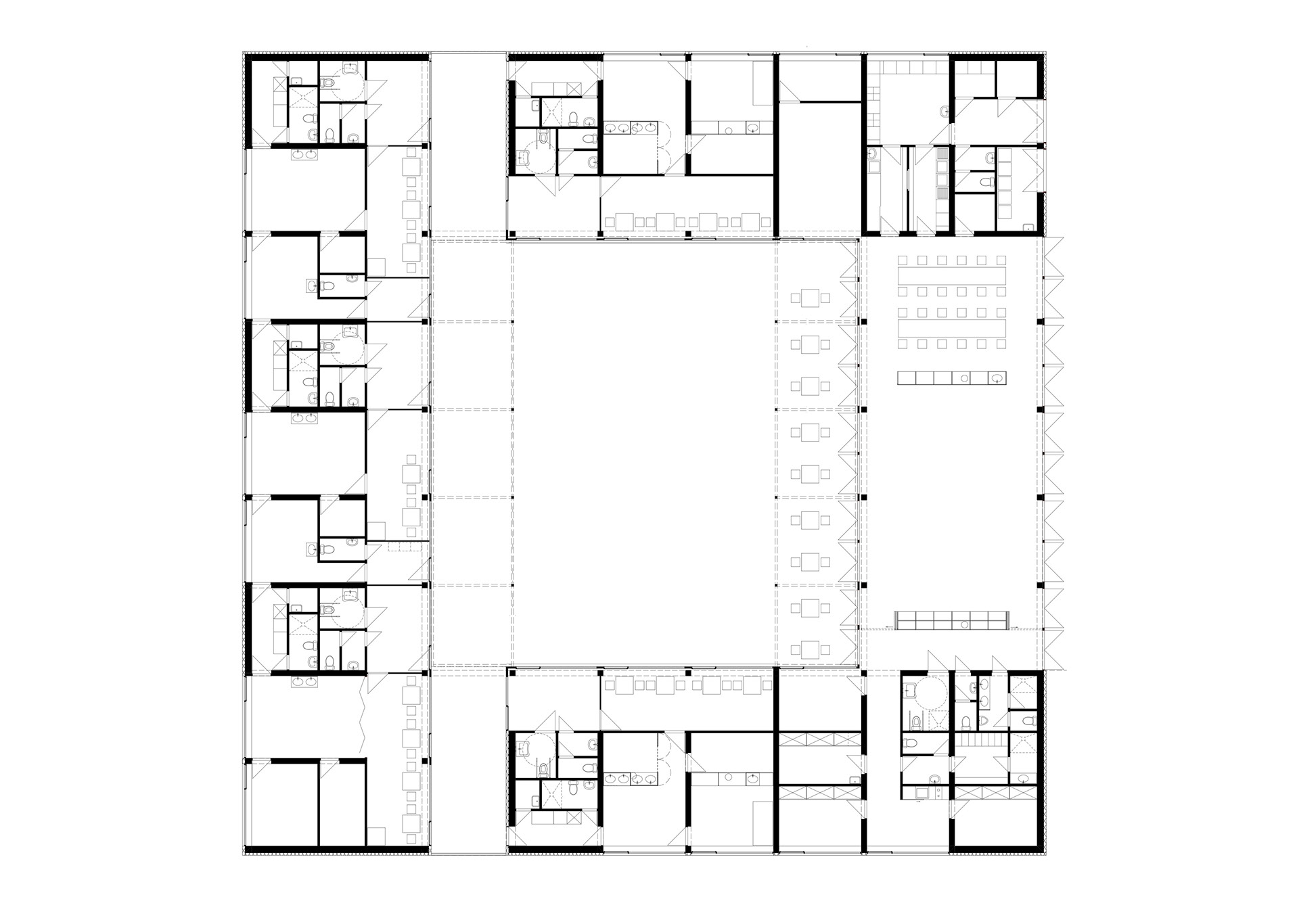
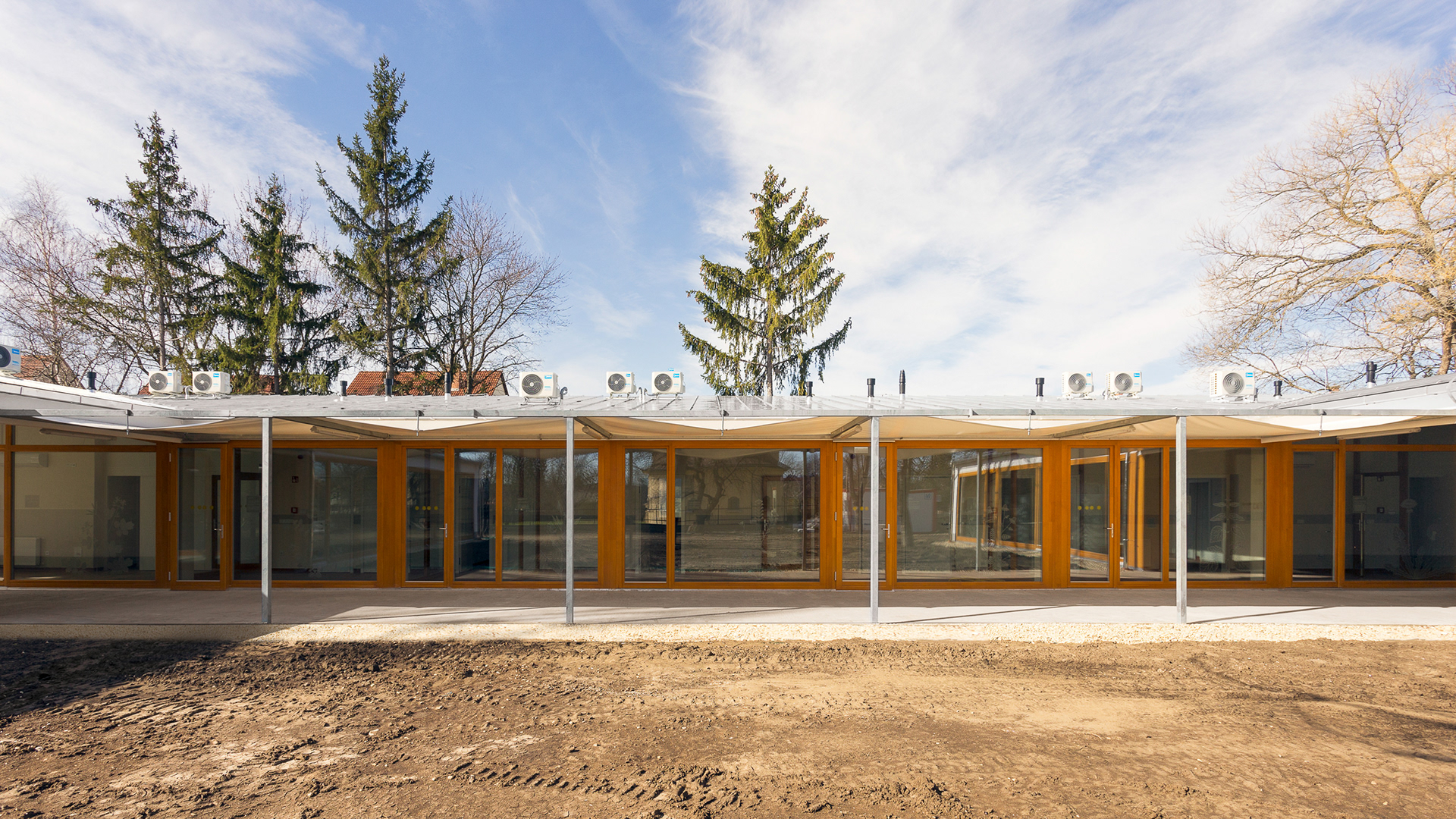
Az épület központi eleme a belső kert. E köré rendeződik a négy fő funkció – a felnőtt és gyermekorvosi rendelő, a védőnői szolgálat illetve az idősek nappali foglalkoztatója.
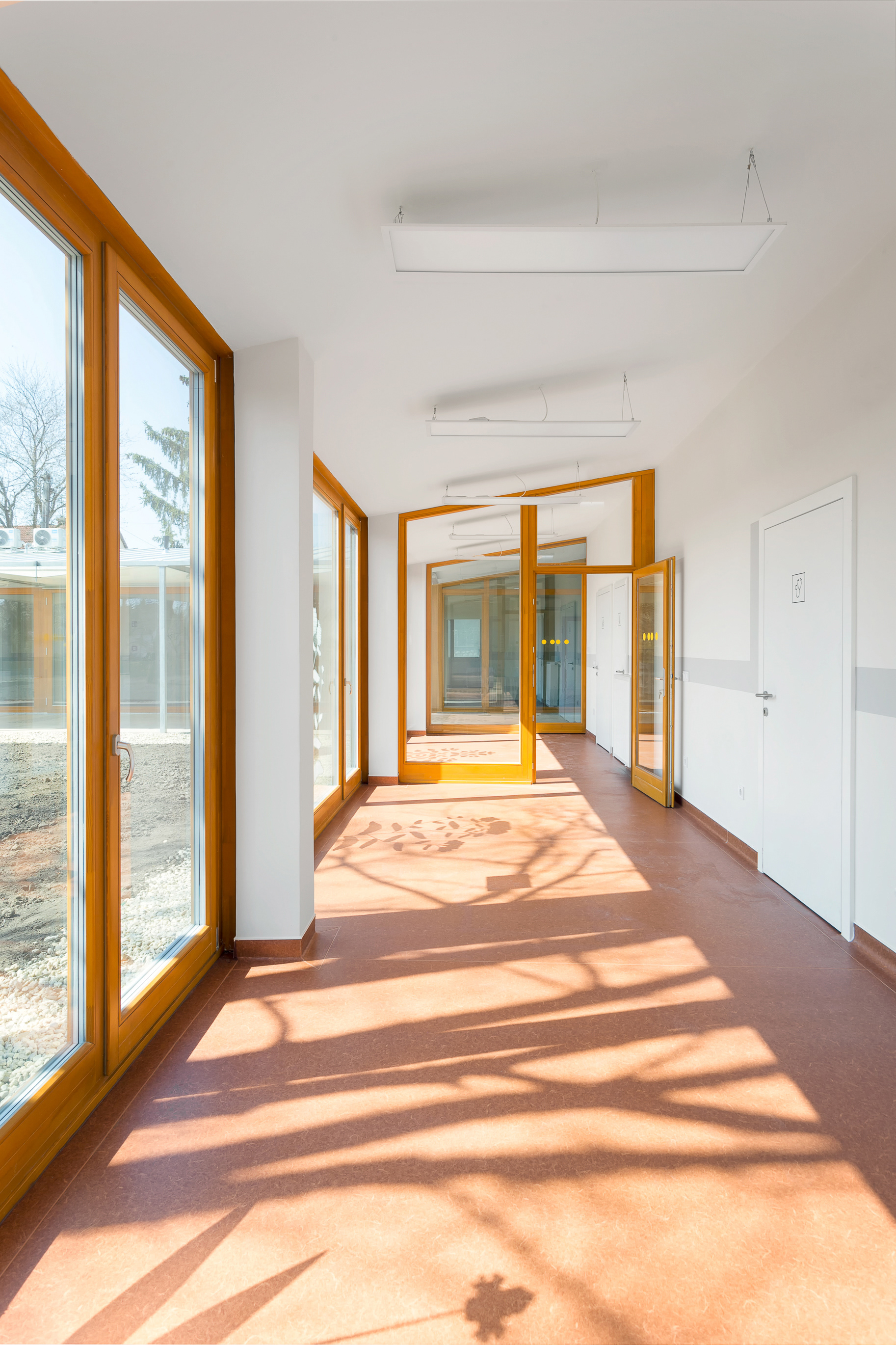
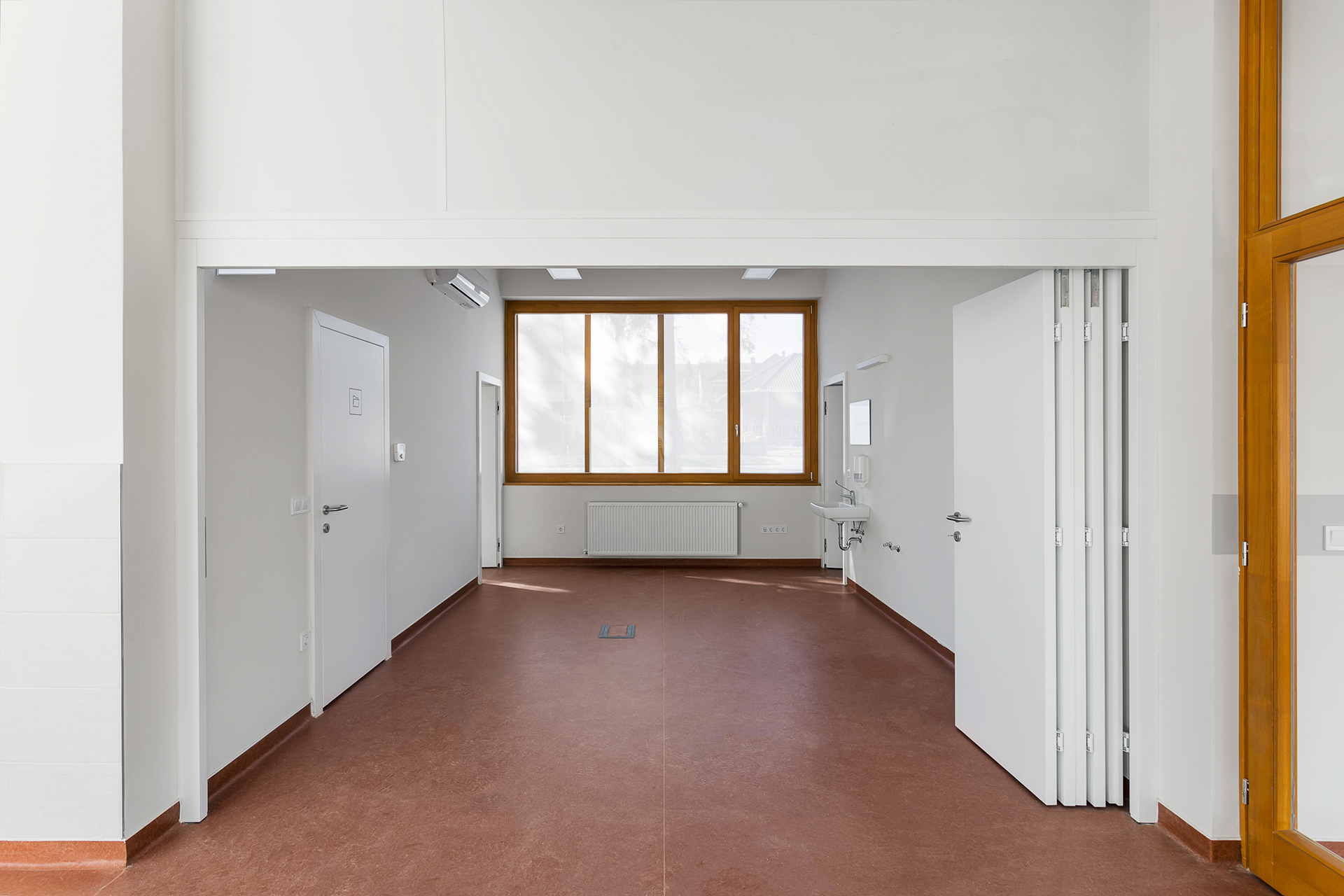
Az orvosi rendelők az átriumot érintő, a kétoldalt –a kisebb forgalmú utcákon – elhelyezett parkolót összekötő, észak-déli tengelyről tárulnak fel. A páciensek a belső kertre néző várókban foglalhatnak helyet, míg a kezelők kifelé, az utcák felé orientáltak.
Az idősek nappali foglalkoztatója az épület keleti oldalára került, a fő helyiségeivel a templom illetve az átrium irányában teljes megnyitással, biztosítva ezáltal a vizuális kapcsolatot a belső udvar és a templom között, a nagyteremhez és az étkezőhöz kapcsolódó fedett terasszal. Az épületrész megközelítése a templom felőli oldalon végigfutó teraszként és gazdasági bejáratként is szolgáló, parkolókat összekötő tengelyről történik. A személyzeti helyiségek a bejárati előtérhez kapcsolódóan az épület dél-keleti, míg az étkezőt kiszolgáló tálaló konyhablokk az észak-keleti sarkában kapott helyet.
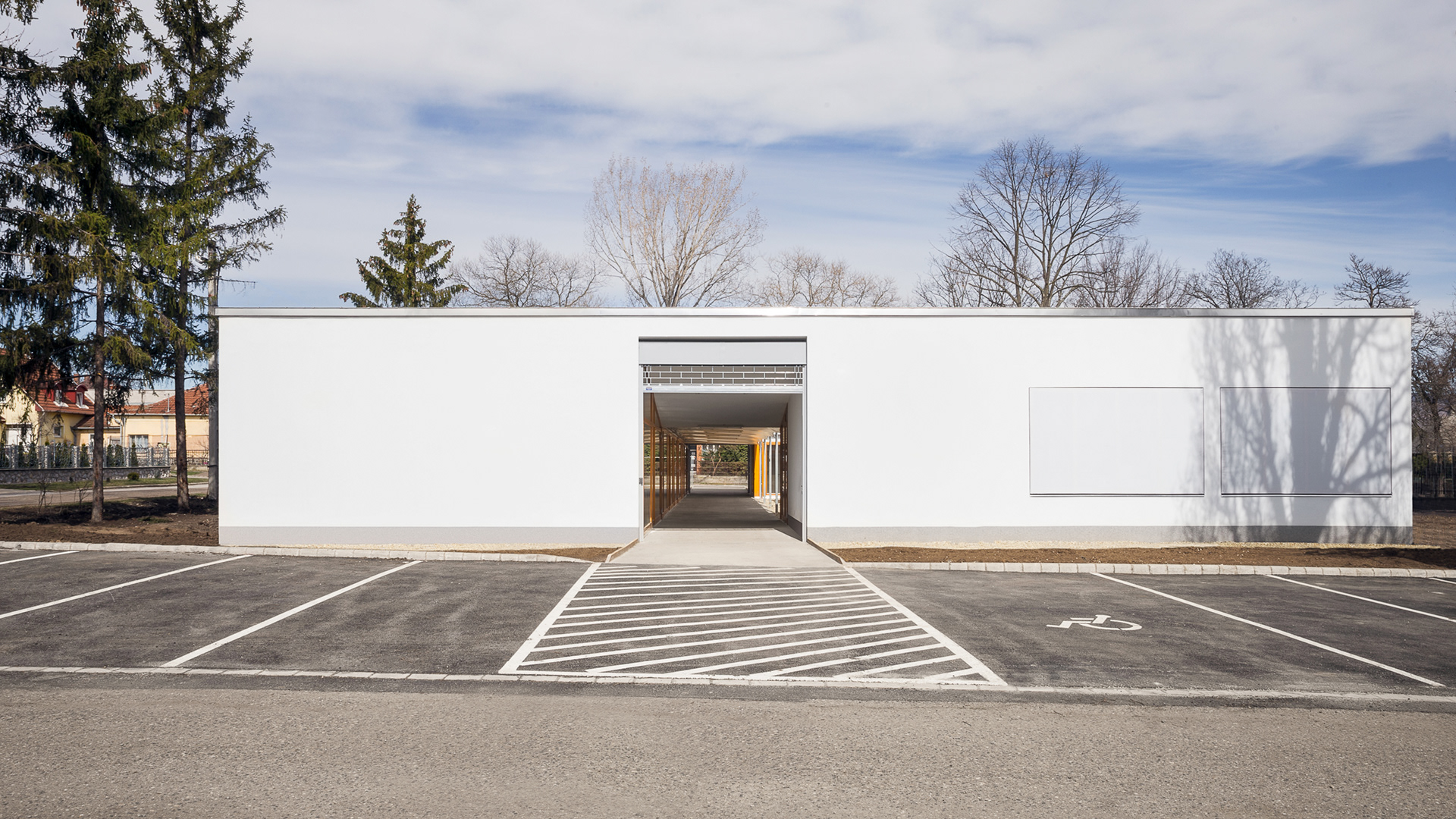
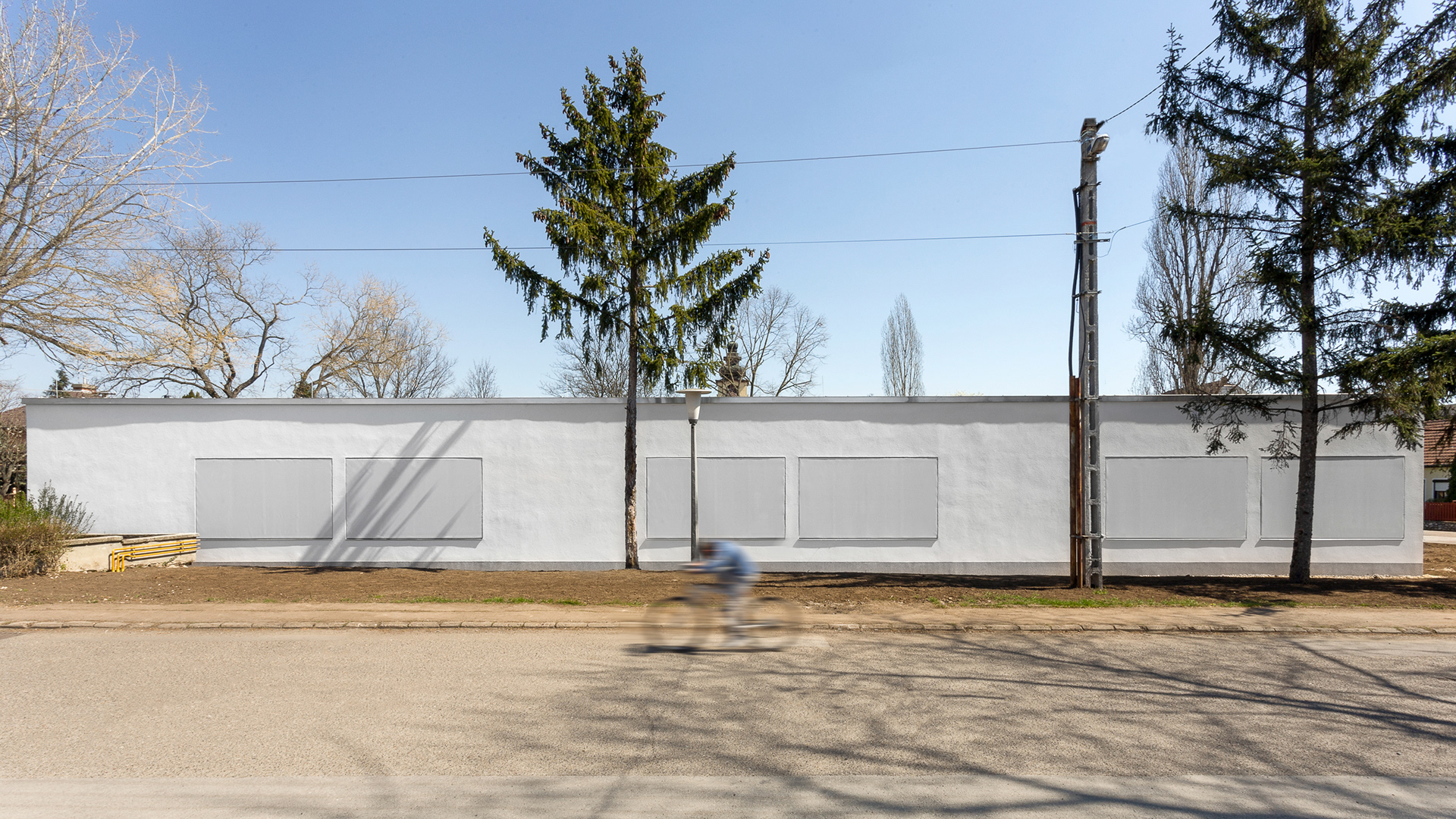
A középület jelleget erősítve a telek körül kerítés nem épül. Az épület főtengelye, ezáltal a belső kert – a homlokzat síkjában – éjszakára zárható. Lekerített kertrész kizárólag az idősek nappali foglalkoztatójához kapcsolódóan, a keleti oldalon, a templom felé készül, az idősek számára kialakított veteményes kerttel.
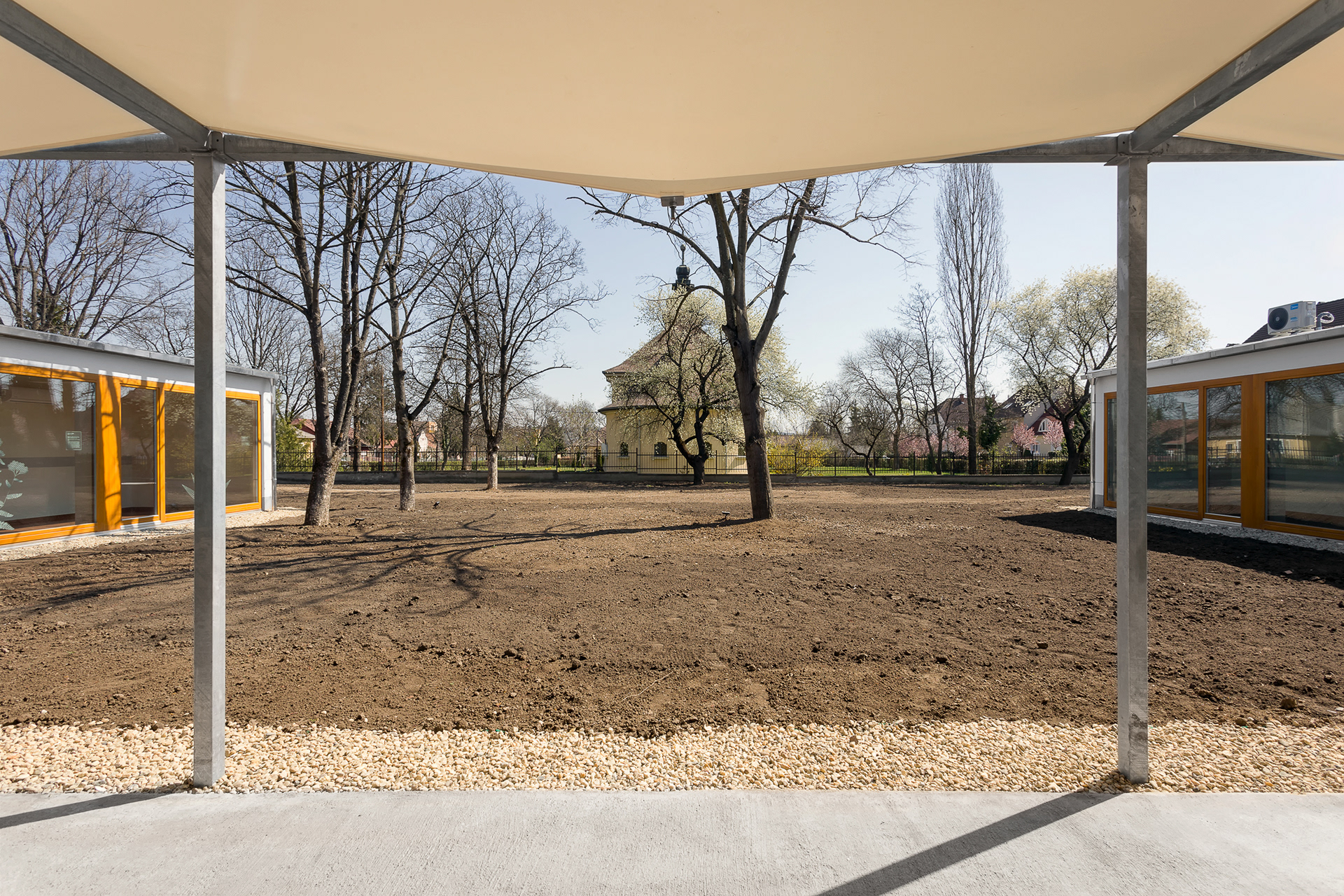
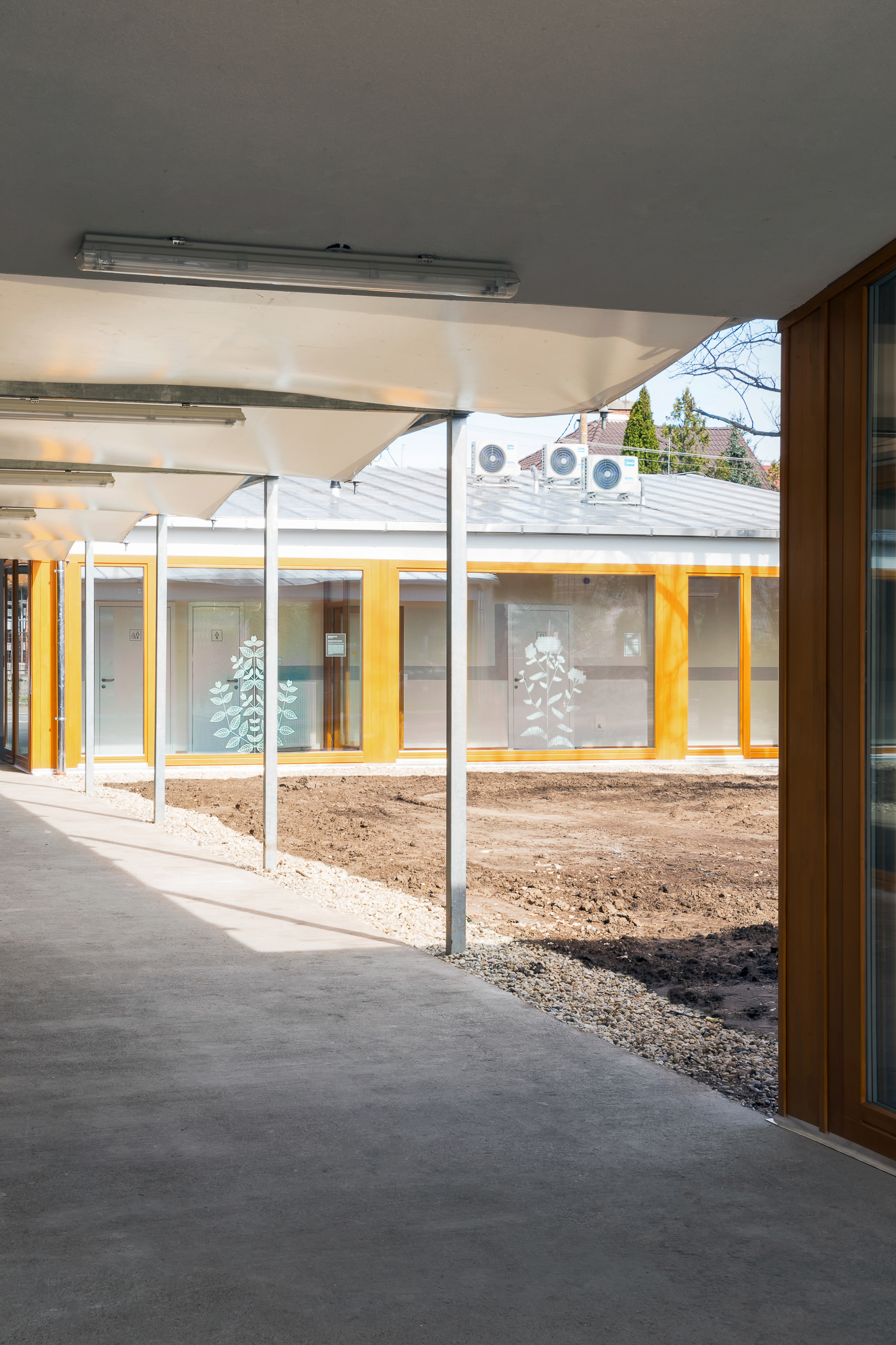
A belső kert amellett, hogy biztosítja a várakozó illetve közösségi helyiségek megfelelő bevilágítását illetve természetes szellőztetését, azzal a céllal készült, hogy az épületet – nem önszántukból, rákényszerülő – használók közérzetén javítson. A kertet a meglévő fák megtartása mellett, gyógynövények ültetésével, egész éven át virágzó füvészkertként képzeltük. A természet gyógyító erejét hangsúlyozva a várók kertre néző üvegfelületeire gyógynövényeket ábrázoló és bemutató infografika került, a várakozás és a betegség okozta kellemetlenség, fájdalom, nem kívánt helyzet enyhítésére.
Az idősek nappali foglalkoztatója nem készült el, remélhetőleg egy későbbi beruházás során a tervezett keretes beépítés is bezárulhat.
ENG
The site, located in the Lajosváros district, is directly adjacent on its eastern side to the St. John Parish Church and its surrounding garden, both of which evoke a strong sacred atmosphere. The axis of the church serves as the organizing line of the building complex.
The central element of the building is the inner courtyard, around which the four main functions are arranged: the adult and pediatric medical practices, the health visitor service, and the daytime center for the elderly.
The medical consulting rooms open from the north–south axis that borders the atrium and connects the parking areas located along the quieter streets on both sides. Patients wait in areas overlooking the inner garden, while the examination rooms are oriented outward, toward the surrounding streets.
The daytime center for the elderly is situated on the eastern side of the building, with its main spaces fully opened toward both the church and the atrium, thereby establishing a visual connection between the inner courtyard and the church. A covered terrace is connected to the community hall and dining area. This part of the building is accessed from the axis connecting the parking areas, which runs along the church-facing side and also functions as a terrace and service entrance. Staff facilities are located in the south-eastern part of the building adjacent to the entrance foyer, while the serving kitchen connected to the dining room occupies the north-eastern corner.
To reinforce the civic character of the building, no perimeter fence is planned around the site. The building’s main axis — and thus the inner courtyard at the line of the façade — can be closed at night. A fenced garden area is planned exclusively for the daytime center for the elderly on the eastern side facing the church, including raised vegetable gardens intended for elderly users.
Beyond providing proper daylight and natural ventilation for the waiting and communal spaces, the inner courtyard was conceived to improve the well-being of those who use the building not entirely by choice, but out of necessity. Preserving the existing trees, the garden was envisioned as a medicinal herb garden with year-round flowering plants. Emphasizing the healing power of nature, infographics depicting and introducing medicinal herbs were placed on the glass surfaces of the waiting areas facing the garden, helping to ease the discomfort, pain, and emotional strain associated with illness and waiting.
The daytime center for the elderly was ultimately not realized; however, it is hoped that a future phase of development may complete the originally planned perimeter composition of the complex.