EN
How can a group of young architects find their home in today’s world without money and commissions?
Only if they create a suitable environment for themselves, from which the local community can also profit.
We contacted the local government to provide us with a vacant building.
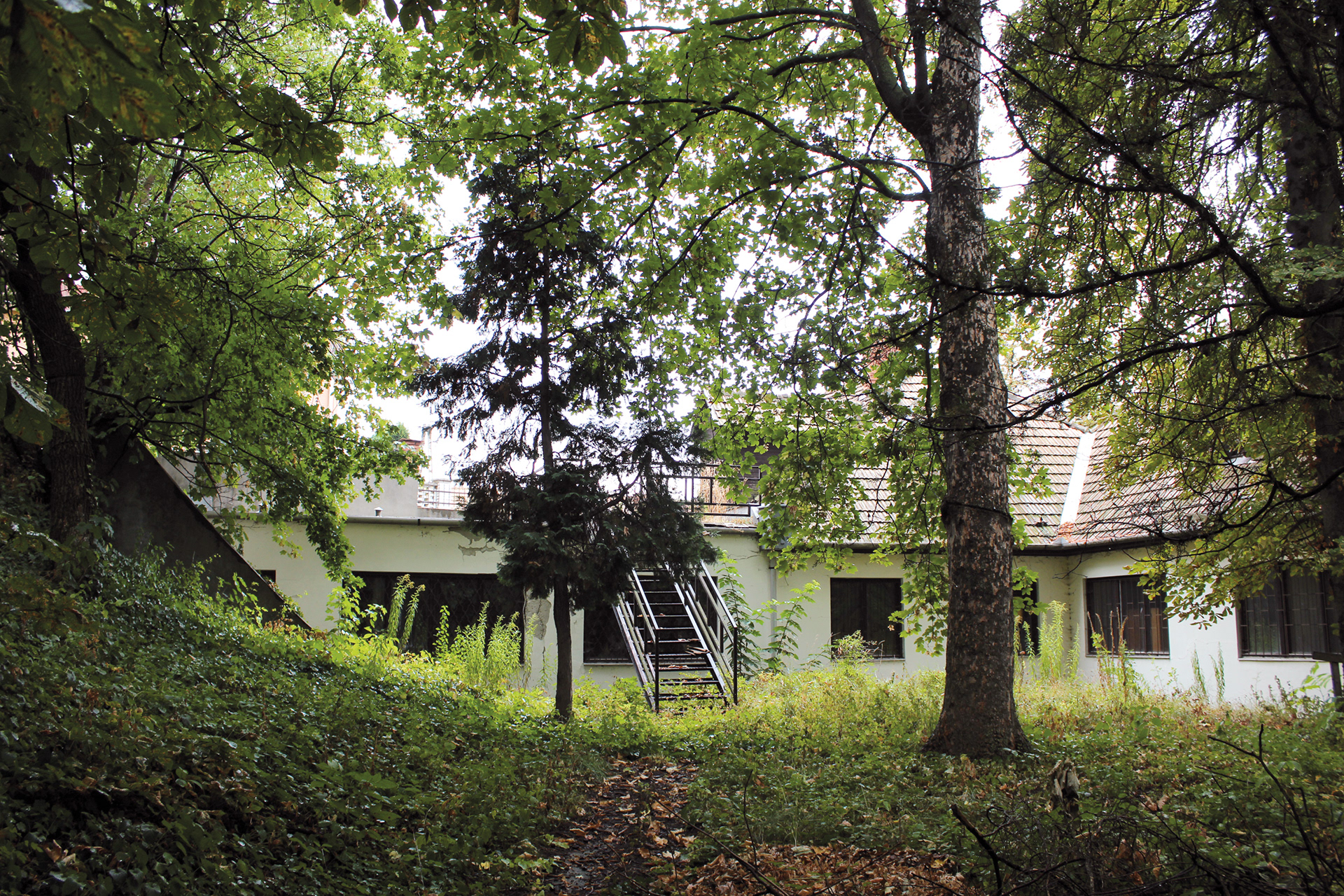
We were granted a 15-year lease of the decaying state-owned building located in the middle of an old park. We had undertaken to implement a value-added reconstruction and fill the building with cultural content.
In defining our aesthetic standards, our guideline was to satisfy the basic technical requirements, but in terms of usability, we sought to achieve maximal functionality. In a collaboration involving the social sphere, the institutional sphere, and the construction industry, we managed to realize an exemplary renovation, making use of already available resources, without seed capital and cash flow.
We reversed the usual course of planning: first, we found material support for the required tasks and then came up with architectural solutions to match these. In less than a year, we managed to renovate the building using the materials received and recycling the objects found on site.
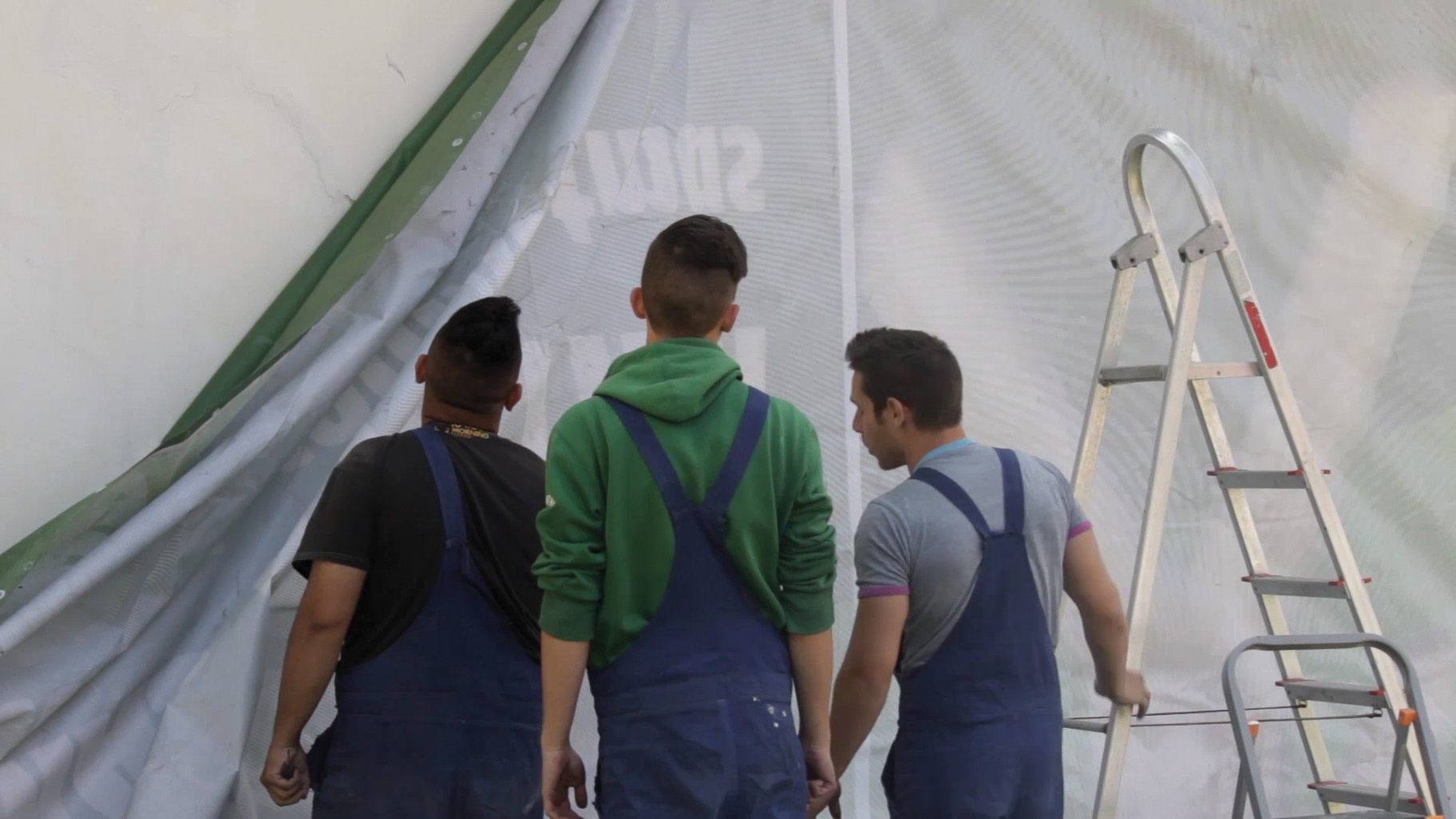
We involved students of a local polytechnic high school and convicts from the local penal institution in the process.
The planning process gained new meaning, and the construction became a collective activity, which pushed the building into the background: the greatest added value of the project turned out to be the growing social network of the collaborators.
Owing to the architectural intervention, a building that was once considered worthless has become a space full of life: a small but emblematic example of the power of community and the will to make a difference.
HU
Hogyan találhat a mai világban otthonra egy fiatal építészcsoport?
Csak úgy, ha megfelelő közeget teremt magának.
Megkerestük a helyi önkormányzatot, hogy biztosítson számunkra egy olyan épületet, amelyben már senki nem lát fantáziát.
Tizenöt évre kaptuk meg használatra az önkormányzati tulajdonban lévő, lassan az enyészetté váló épületet egy őspark közepén. Vállaltuk, hogy értéknövelő beavatkozást hajtunk végre, és megtöltjük az épületet kulturális tartalommal.
Az esztétikai elvárások meghatározásánál a műszakilag szükséges minimum, a használhatóság szempontjából viszont a funkcionalitás elérésnek a maximuma volt az irányadó számunkra. Építőipari, társadalmi és intézményi összefogással példaértékű felújítást valósítottunk meg csakis az eleve rendelkezésre álló erőforrások hatékony felhasználásával, tehát kezdőtőke és pénzmozgás nélkül.
Megfordítottuk a tervezés szokott irányát: először a szükséges feladatokra kerestünk támogatókat, majd a felajánlott anyagok felhasználásához találtunk építészeti megoldásokat. Kevesebb mint egy év alatt sikerült felújítanunk az épületet, a támogatóktól kapott építőanyagokból és a helyszínen talált tárgyak újrahasznosításával.
A megvalósulási folyamatba bevontuk egy helyi szakközépiskola szakipari tanulóit, valamint a helyi büntetés-végrehajtási intézet fogvatartottait is.
A tervezés folyamata új értelmet nyert, a kivitelezés pedig közösségi tevékenységgé emelkedett, amelyhez képest az épület maga részben háttérbe is szorult: a legnagyobb hozzáadott érték pedig a szervezés lett, valamint az együttműködés egyre növekvő közösségi hálója.
Az építészeti jelenléttel egy korábban értéktelennek tekintett épület mára egy élő hellyé vált, egy apró, de követhető példát mutatva a tenni akarásról, a közösség erejéről.

aesculus
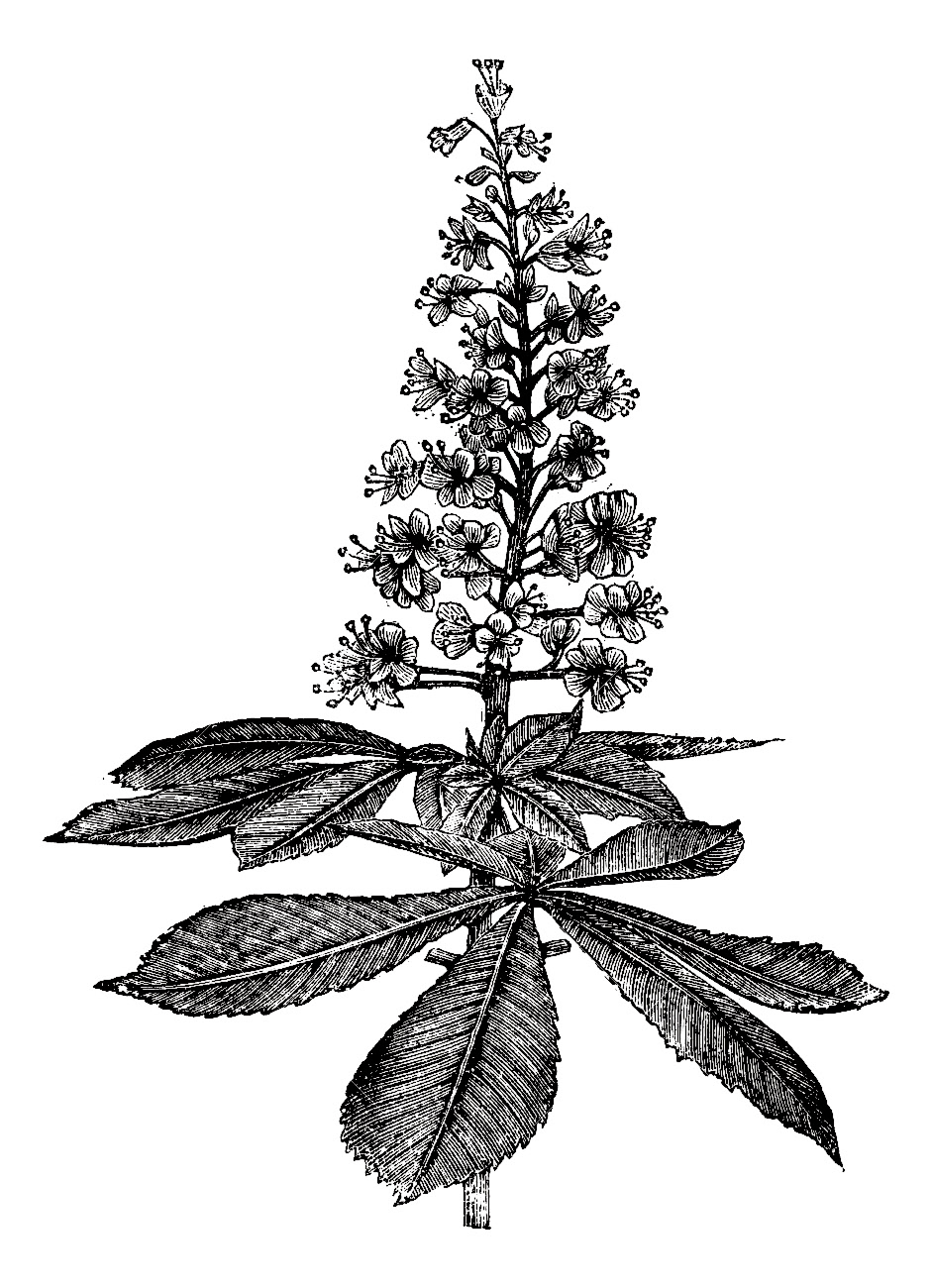
The celebrated Hungarian novelist Géza Gárdonyi (1863–1922)—whose most famous novel, Stars of Eger, is a fundamental part of the curriculum in primary schools—fashioned a botanical garden around his house in the early 1900s. In addition to having a significant role in the formation of local identity, by planting horse chestnut trees, he became the first activator in the process.
The Gárdonyi Garden became our point of departure: the place that captivated and empowered us throughout the project, the place where thoughts are conceived. Its presence has also determined the destiny of the abandoned, crumbling building
it accommodates.
Gárdonyi Géza (1863–1922) magyar író, legismertebb regénye, az Egri Csillagok a hazai alapfokú oktatás része. Amellett, hogy fontos szerepe volt a helyi identitástudat kialakulásában, az 1900-as évek elején botanikus kertet hozott létre a háza körül. A vadgesztenye fák ültetésével a folyamat első aktivátorává vált.
A Gárdonyi-kert lett számunkra a kiindulási pont: a hely, amely megragadott minket, ahonnan a folyamat során az erőt merítettük, ahol a gondolatok születtek, születnek. Jelenléte a magára hagyott, omladozó épület sorsát is meghatározta.





communication / kommunikáció
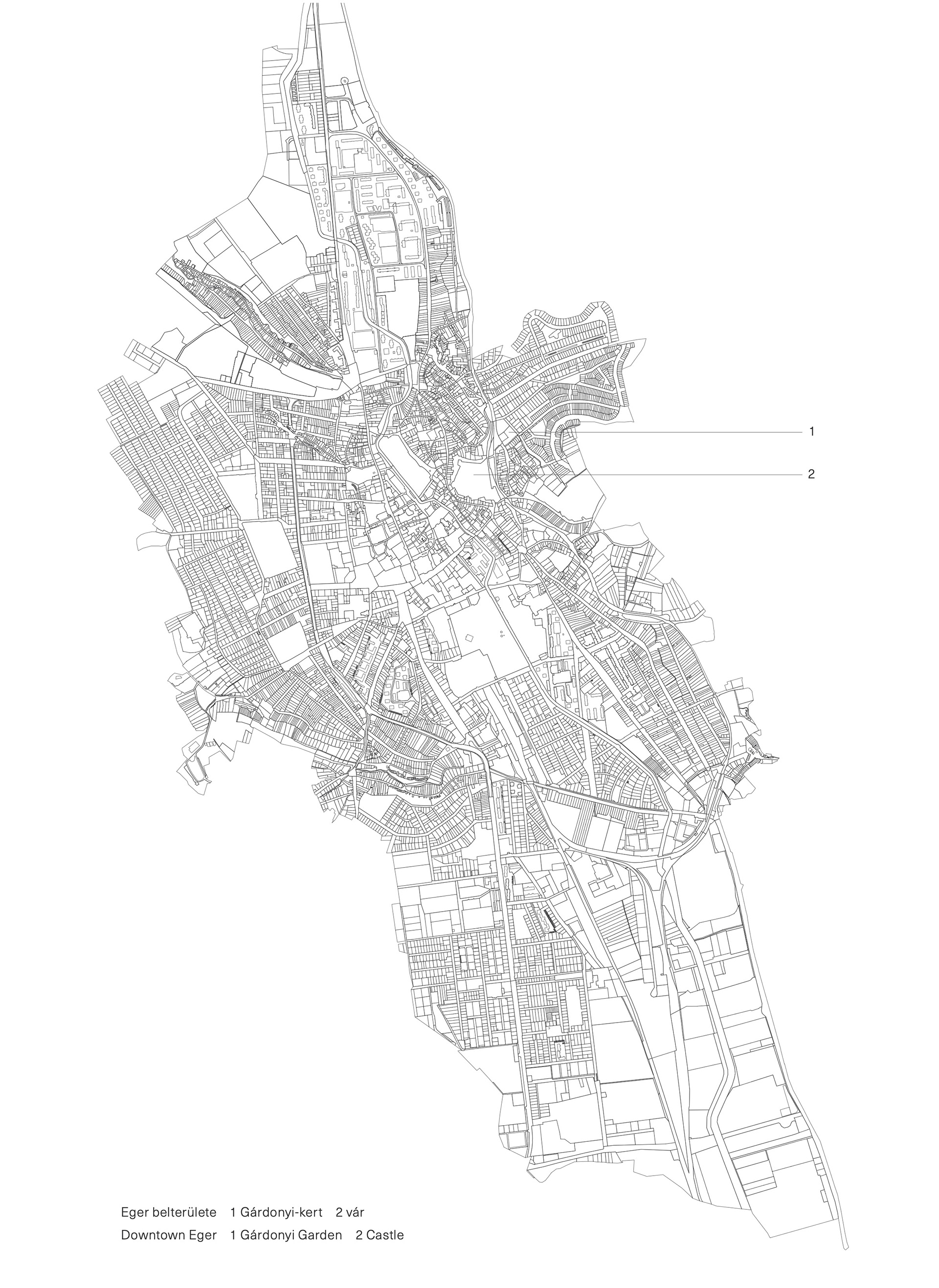
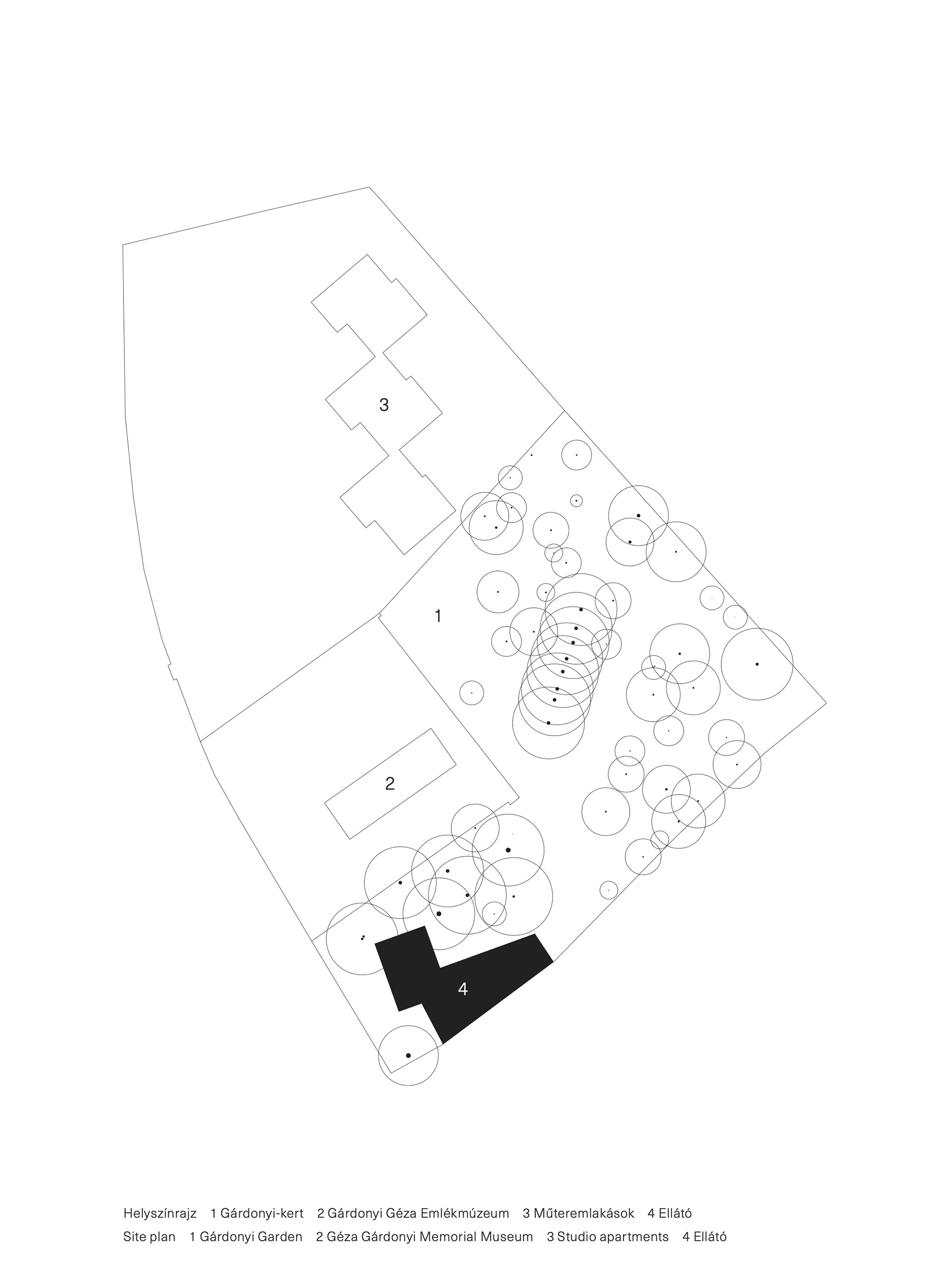
We contacted the local government to provide us with a building that no one finds the inspiration to refurbish and was too expensive to maintain. We were granted a 15 year lease of the decaying state-owned building located on the premises of the historical Gárdonyi Garden, next to the Géza Gárdonyi Memorial Museum.
We had outlined a sustainable model hinged on local needs: we had undertaken to implement a value-added reconstruction and fill the building with cultural content. The realization of the project was founded on mutual trust, with a focus on communication, involving the continuous presentation of partial results. The municipality’s responsibility and risk-taking, as well as their conscious participation, were indispensable elements of the process.
Megkerestük a helyi önkormányzatot, hogy biztosítson számunkra egy olyan épületet, amelyben már senki nem lát fantáziát és költséges az egyben tartása. Tizenöt évre kaptuk meg használatra az önkormányzati tulajdonban lévő lassan az enyészetté váló épületet a történeti Gárdonyi-kert területén, a Gárdonyi Géza Emlékmúzeum szomszédságában.
A helyi igényekre épülő, fenntartható modellt vázoltunk fel: vállaltuk, hogy értéknövelő beavatkozást hajtunk végre, és megtöltjük kulturális tartalommal. Mindezt a részeredmények folyamatos bemutatása mellett, a kommunikációra összpontosítva, a kölcsönös bizalomra építve valósítottuk meg. A városvezetés felelősség- és kockázatvállalása, valamint tudatos részvétele a folyamat elengedhetetlen eleme volt.
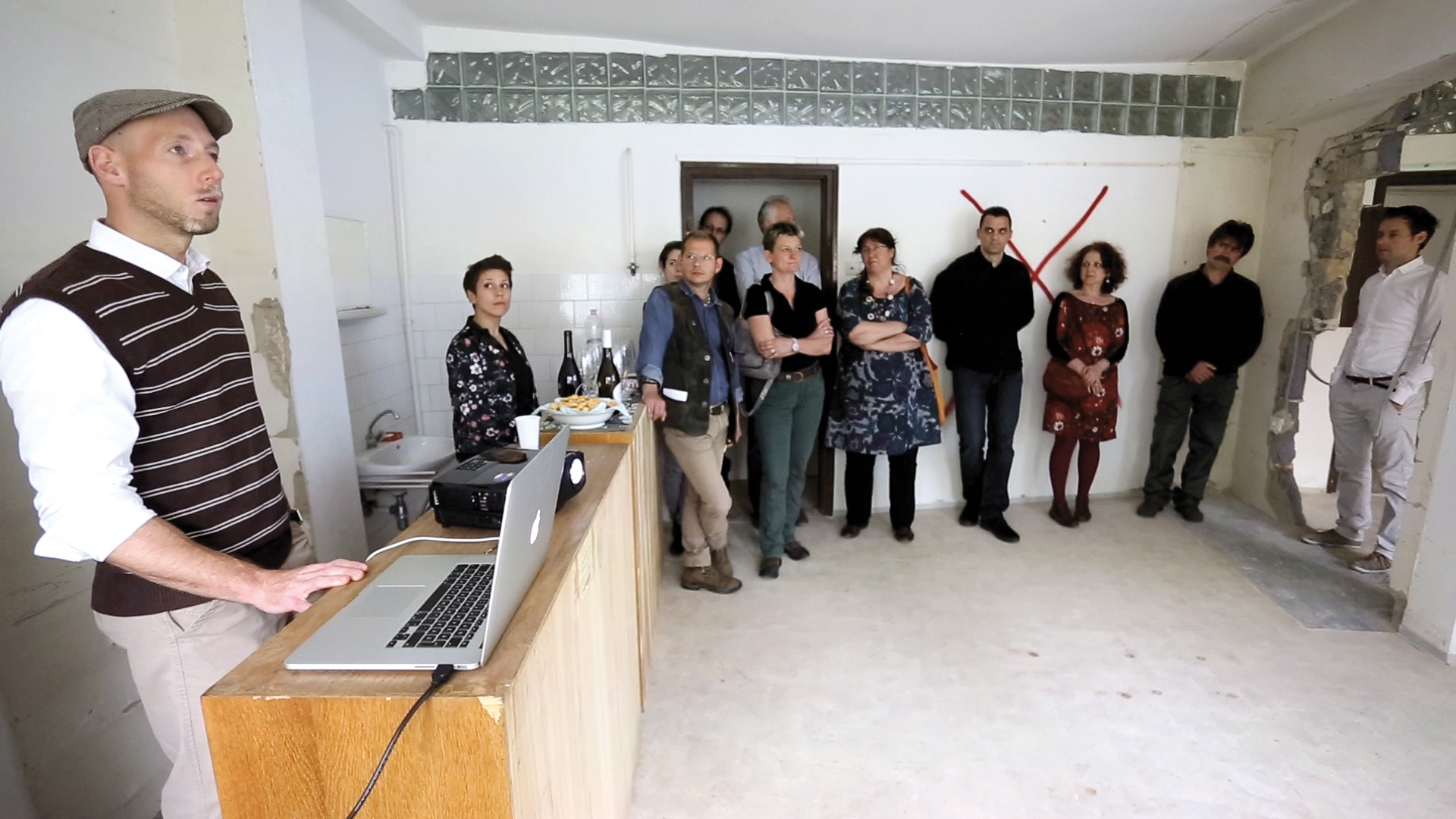
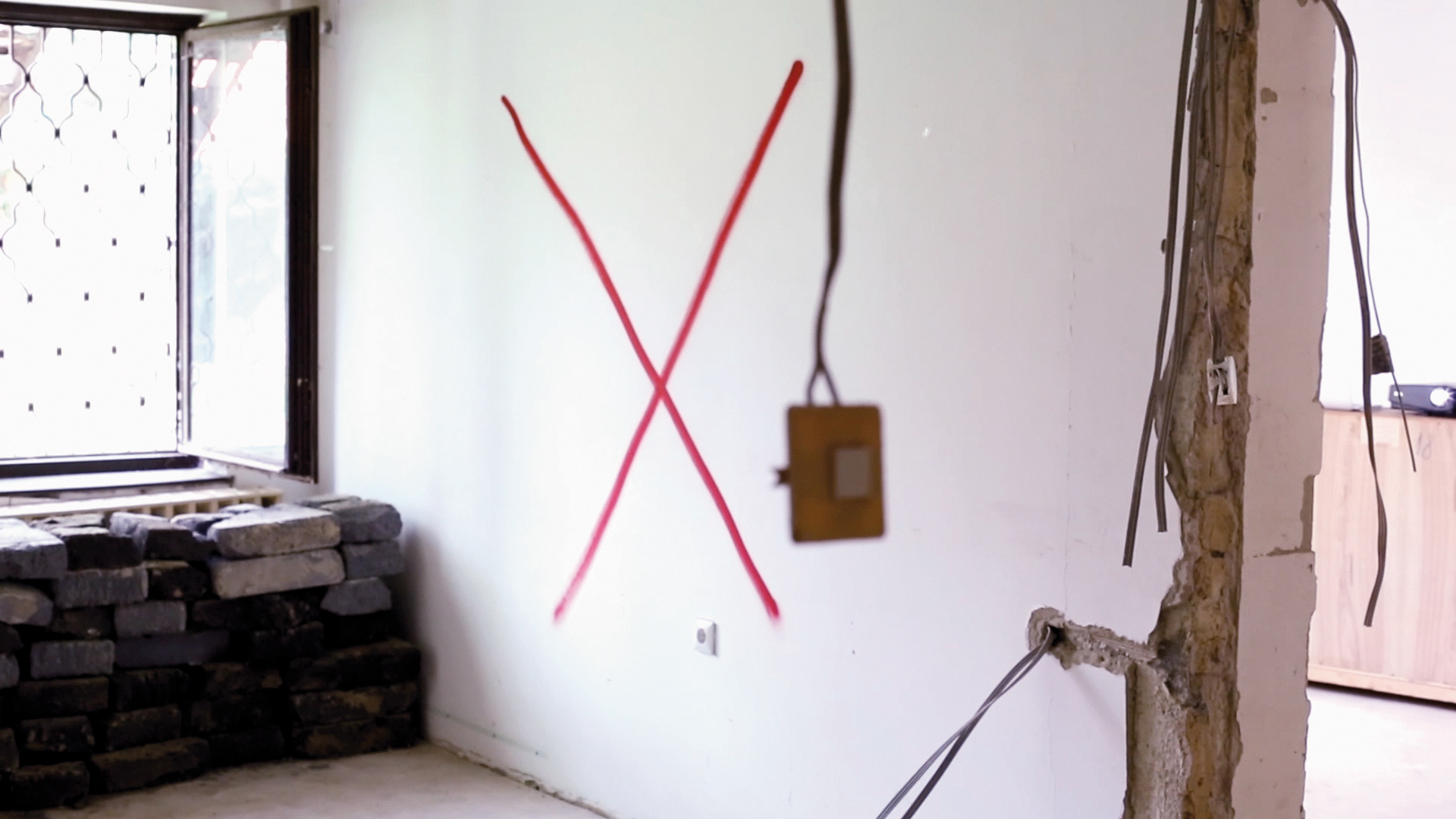

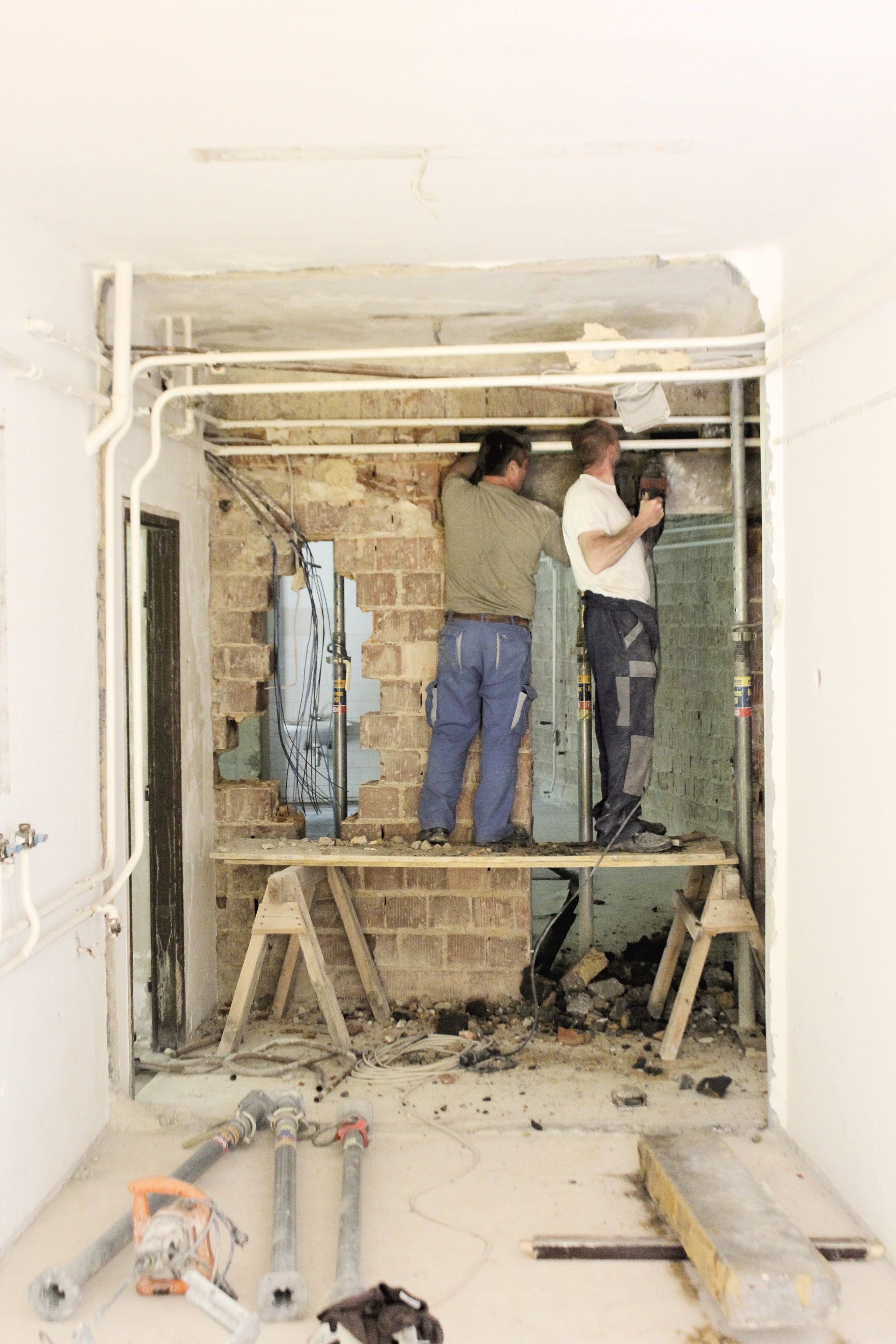
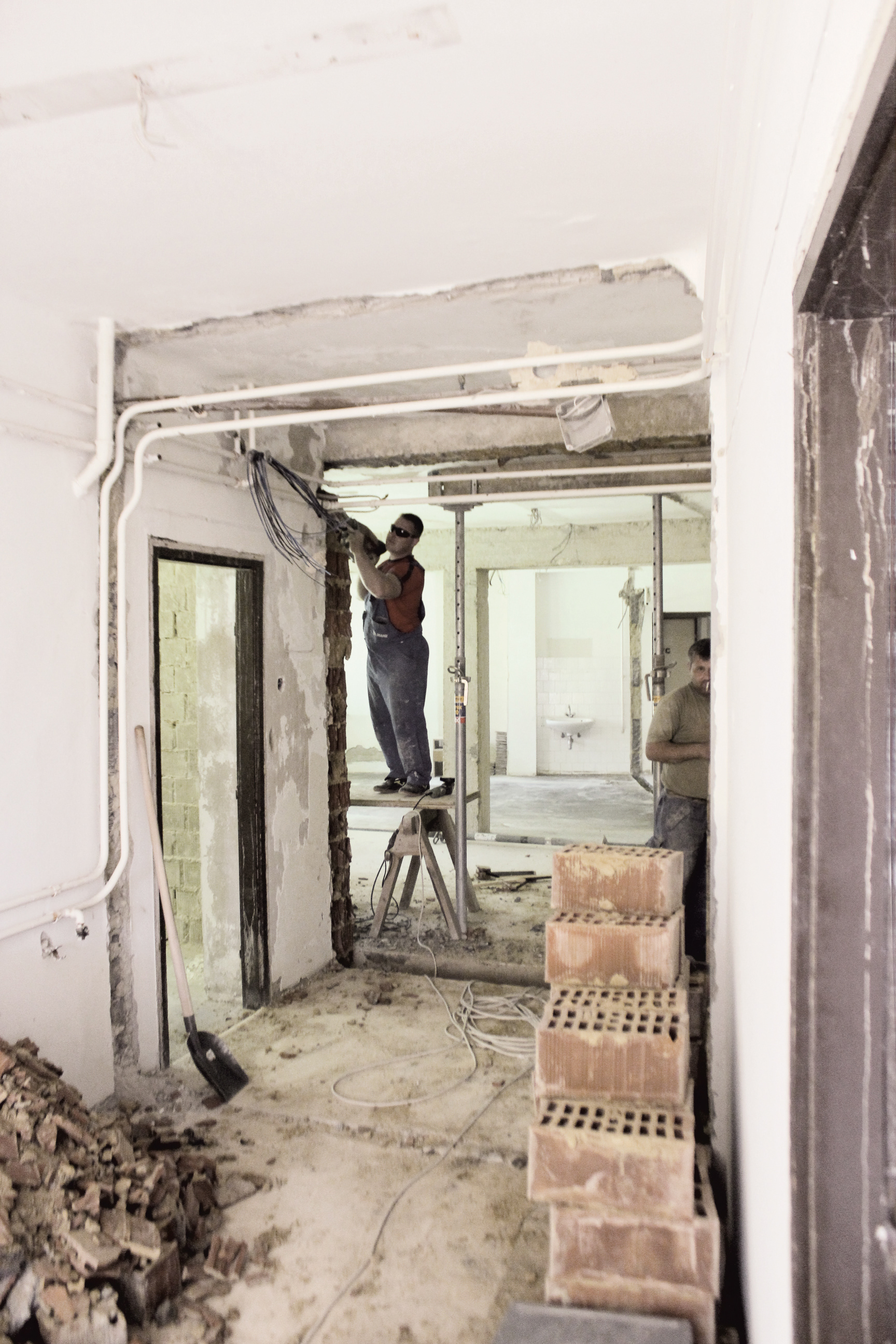
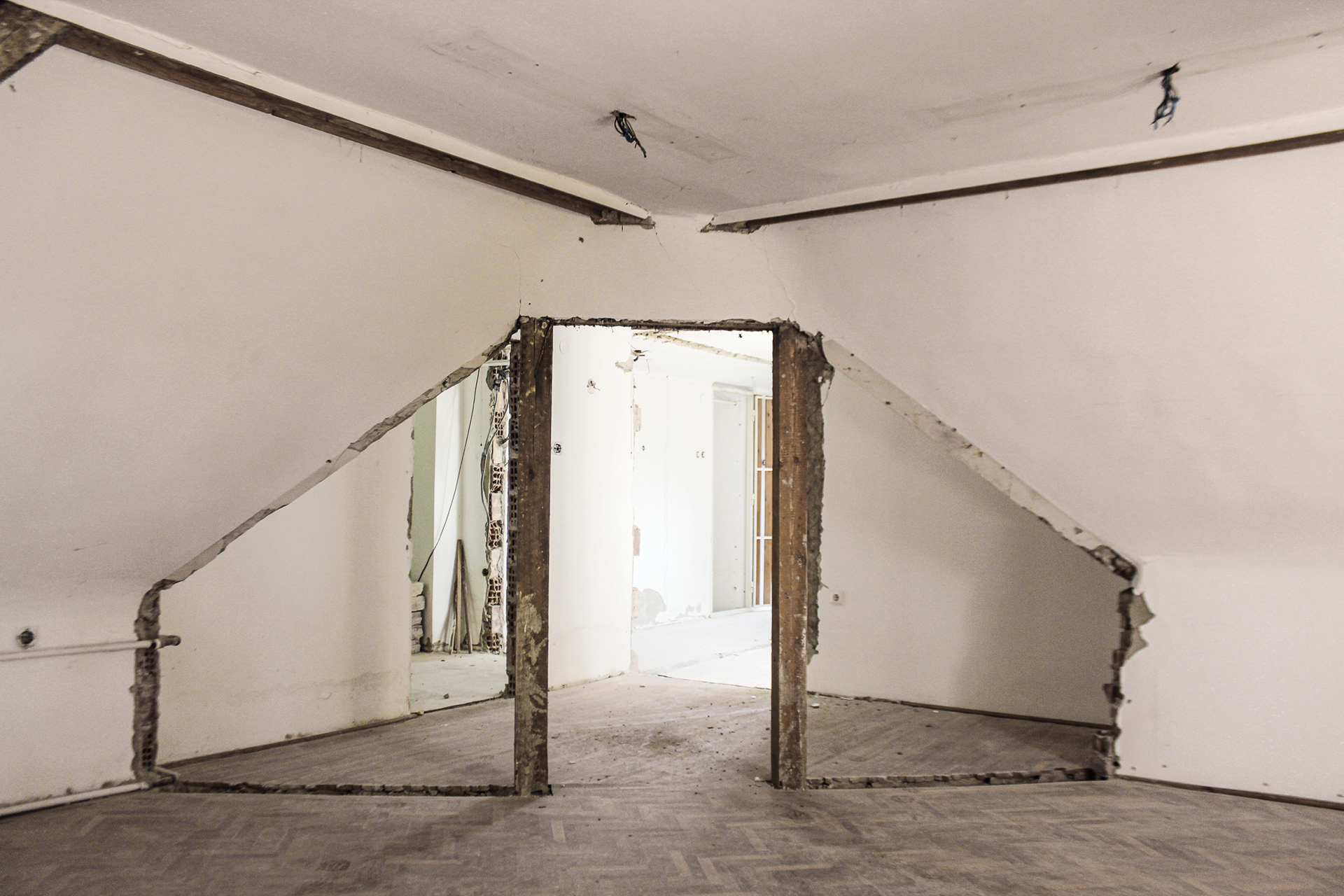
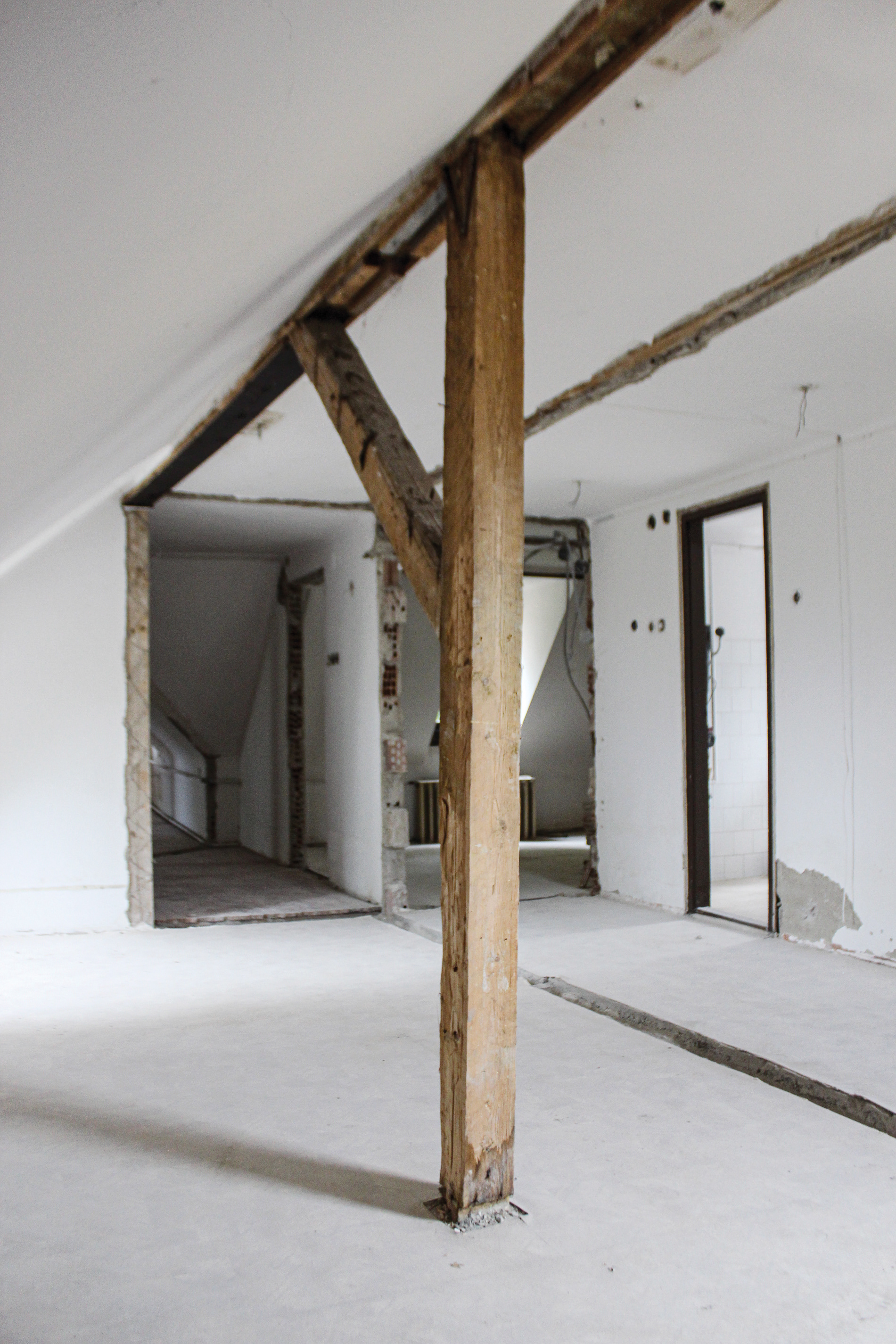
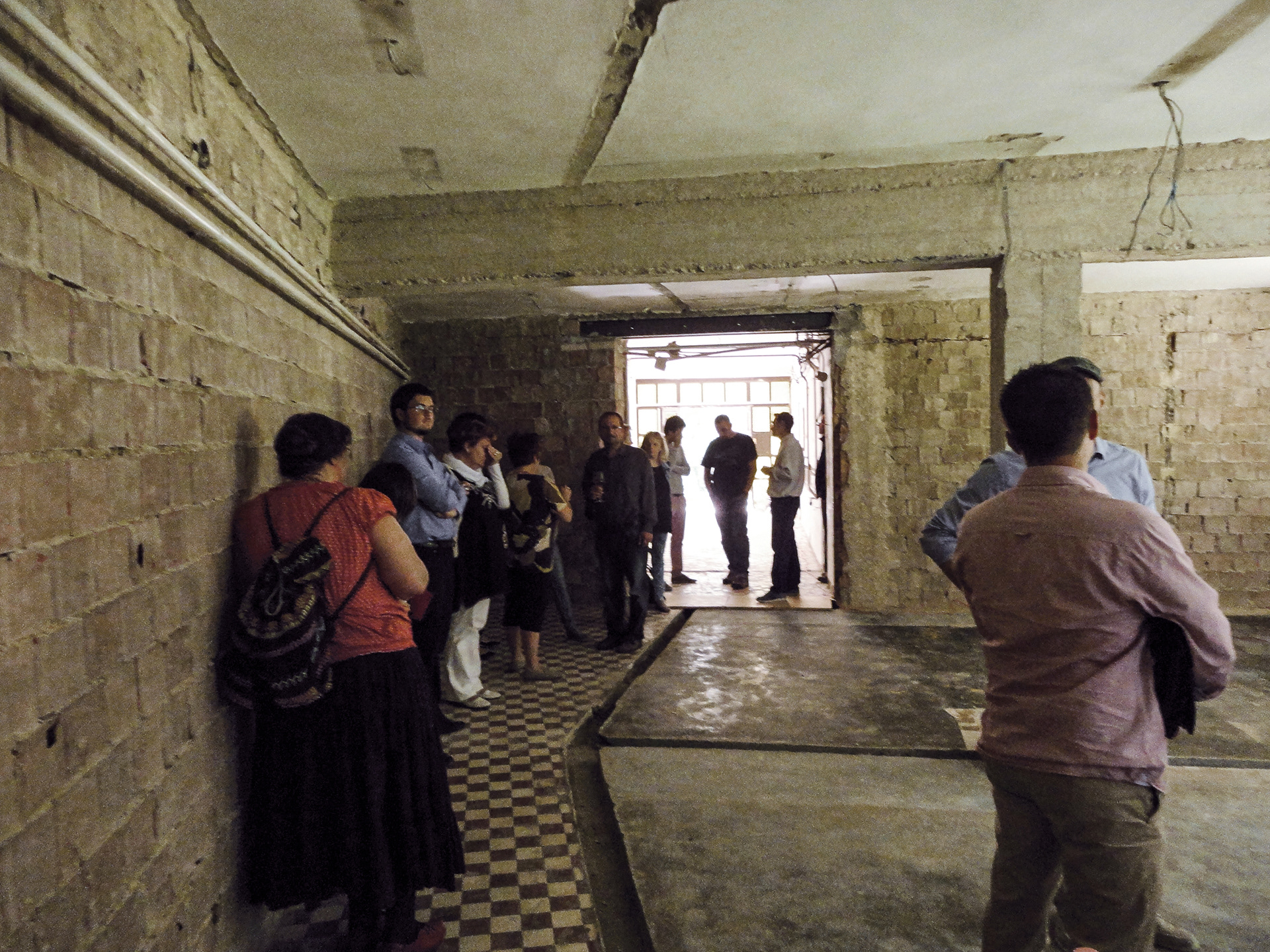
Some necessary interventions had to be implemented in the building in order to develop its new function. Besides solving technical problems, we opened up spaces and tore down walls. We continuously presented our ideas to the municipality on site.
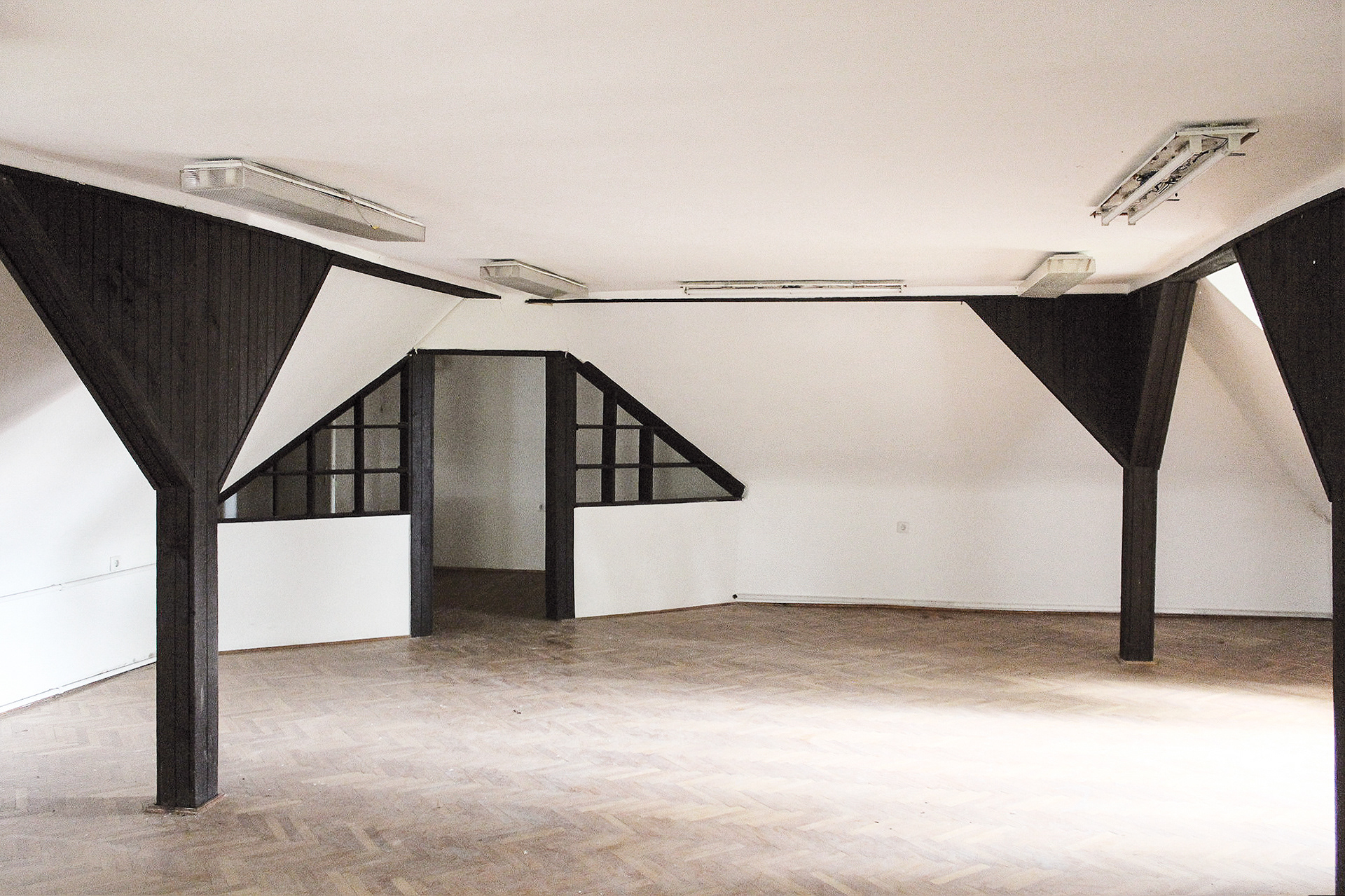
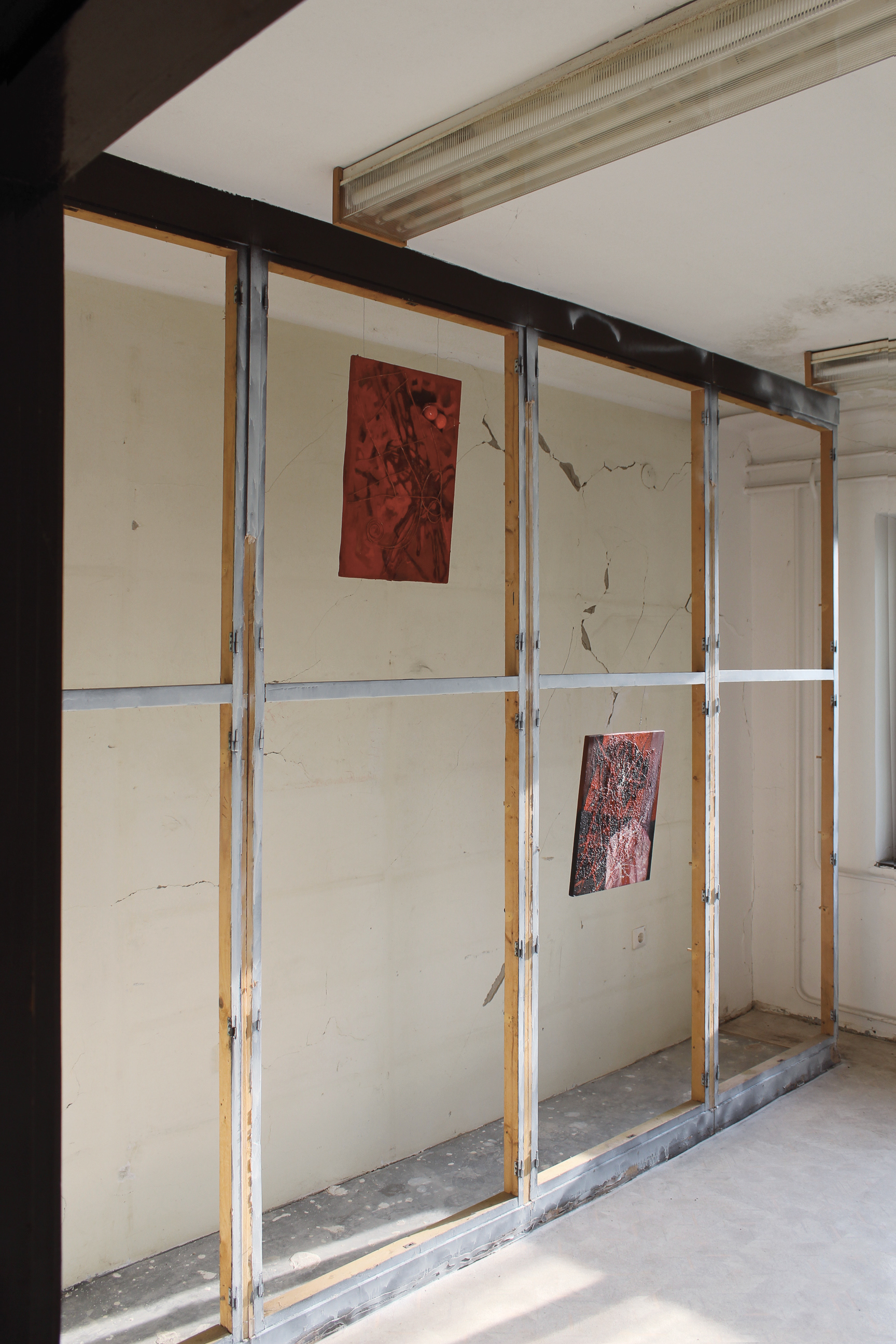
During the first such presentation, we organized an exhibition to demonstrate how the building was already prepared to fulfil its new cultural function even in its ruinous condition. The exhibited objects should be interpreted in an unusual context, in unison with the components of built-in furniture, their imprint of decades of history, and the signs of the building’s deterioration.
Az új funkció kialakításához szükségszerű beavatkozásokat hajtottunk végre az épületen. A műszaki problémák megoldása mellett tereket nyitottunk össze, falakat bontottunk el. Elképzeléseinket a helyszínen folyamatosan prezentáltuk az önkormányzat felé.
Az első prezentáció alkalmával kiállítással szemléltettük, hogy az épület romos állapotában is kész új, kulturális funkciójának betöltésére. A kiállítási tárgyak a szokásostól eltérő kontextusban, a beépített bútorok elemeivel, azok évtizedes lenyomatával és az épület állagromlásának jeleivel együtt értelmezendőek.

in-kind sponsorship / természetbeni támogatás
While negotiating with the municipality, we queried our contacts in construction industry whether they would back this initiative. To our greatest joy, not many doors remained shut even in these dire times.
We reversed the usual course of planning: first, we found material support for the required tasks and then came up with architectural solutions to match the materials offered by sponsors.
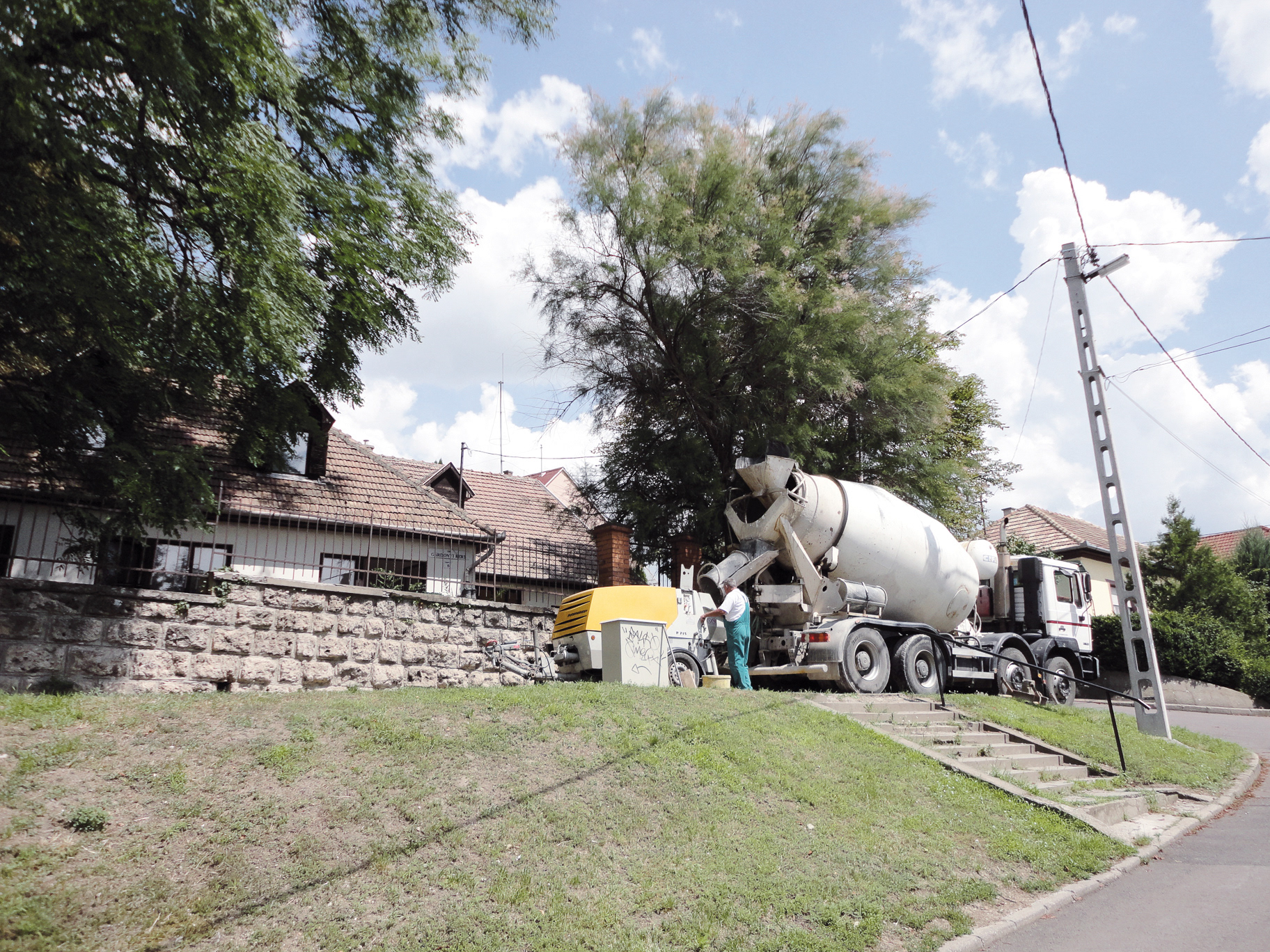
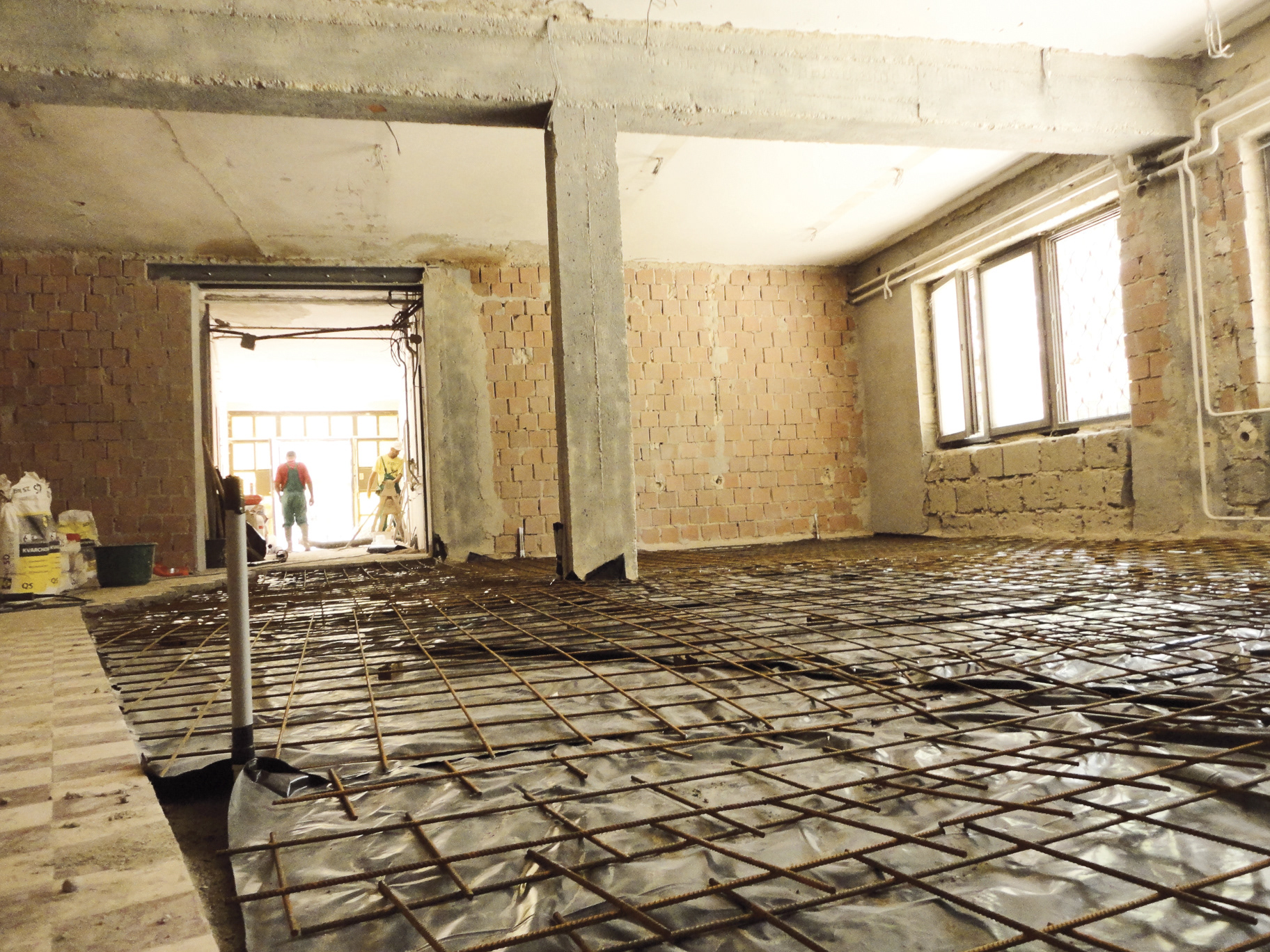
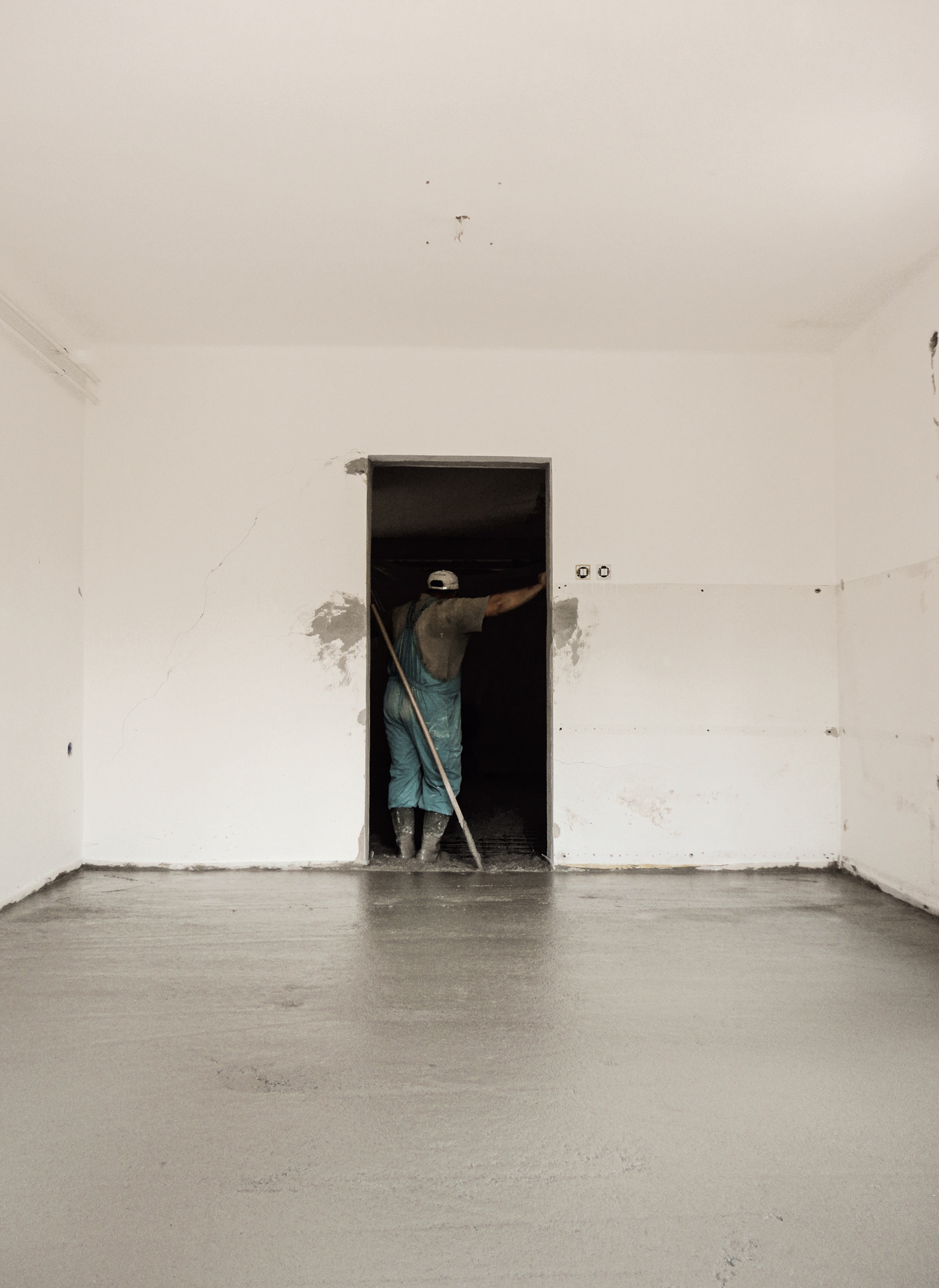
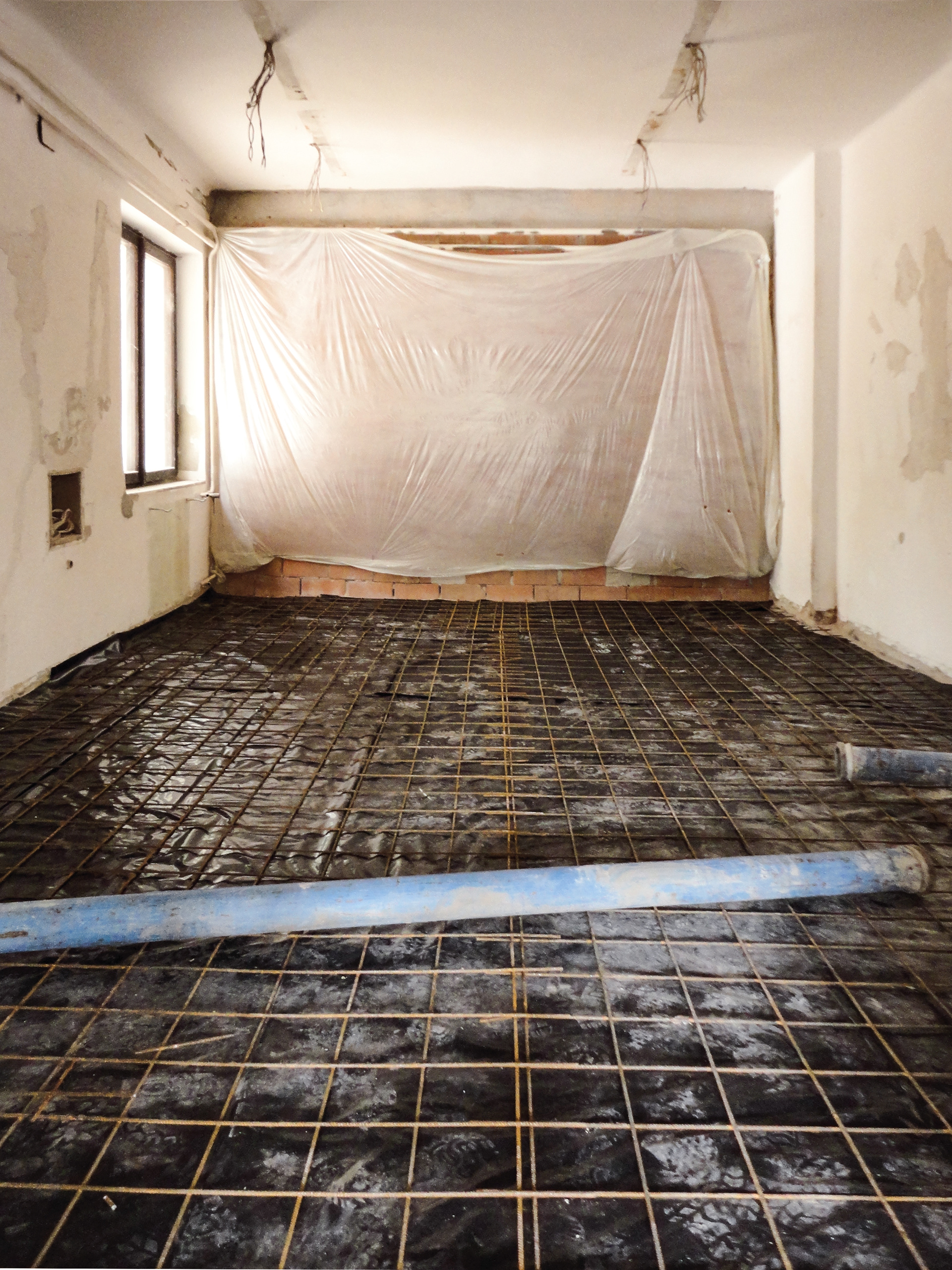
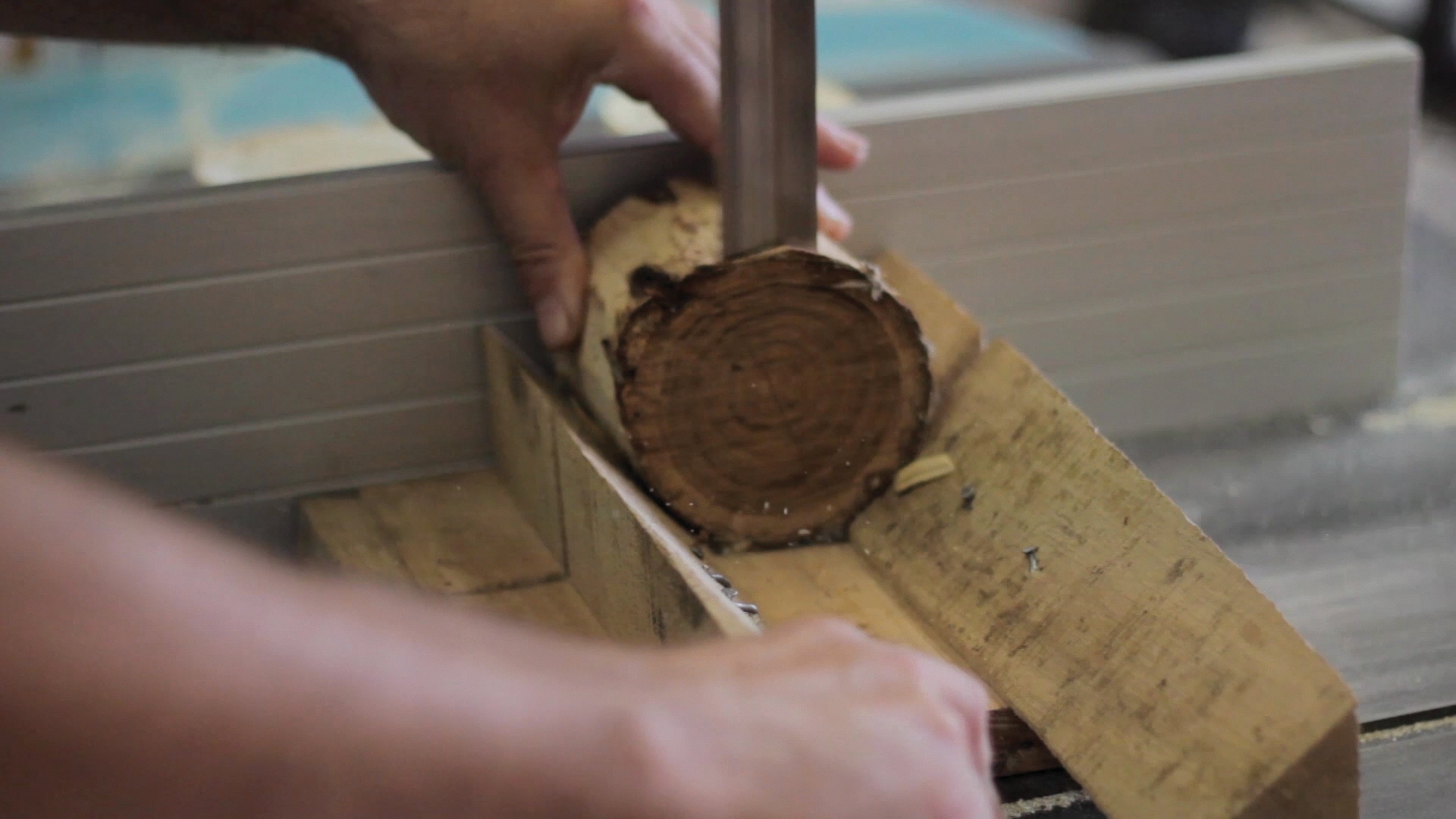
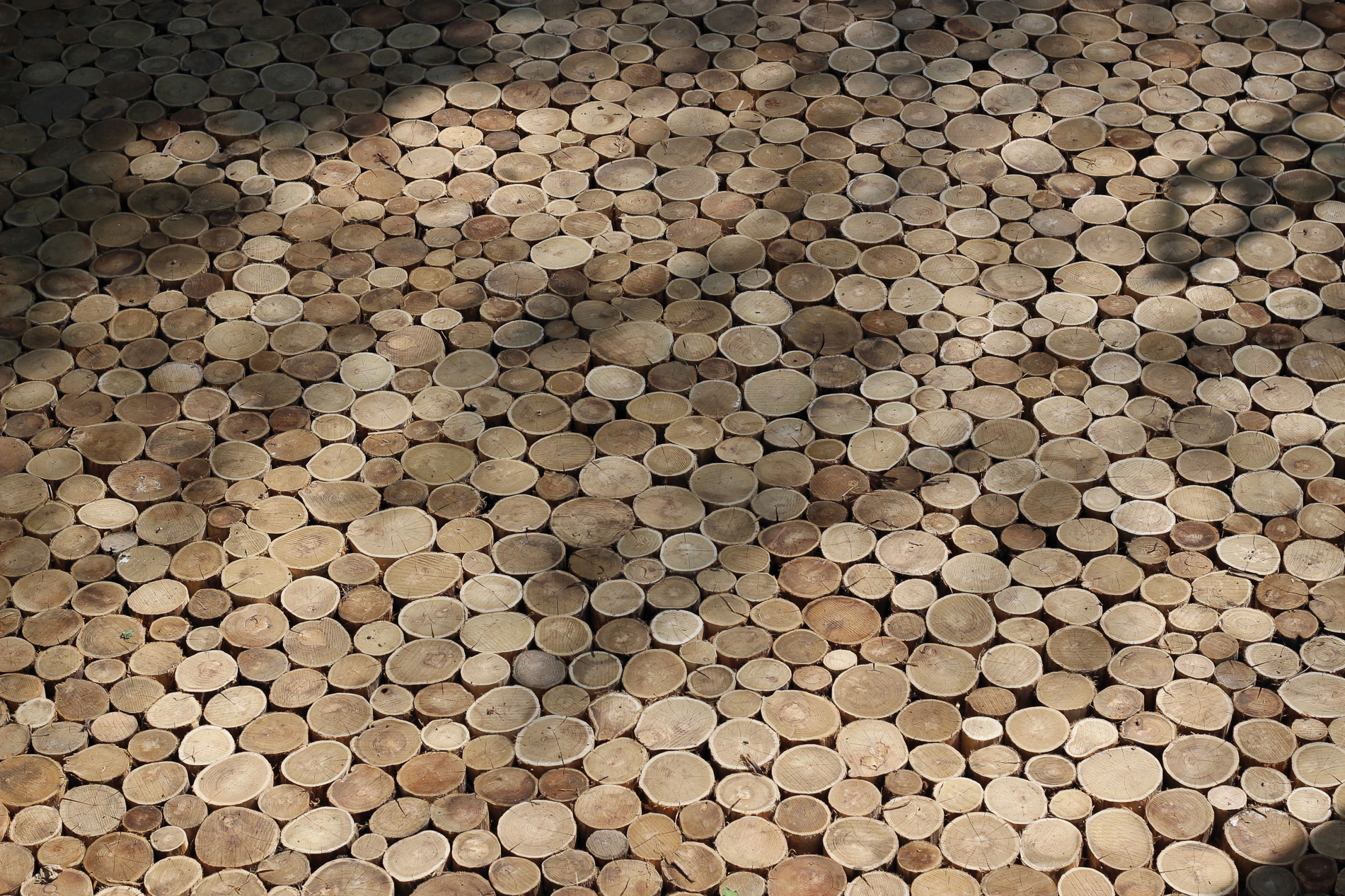
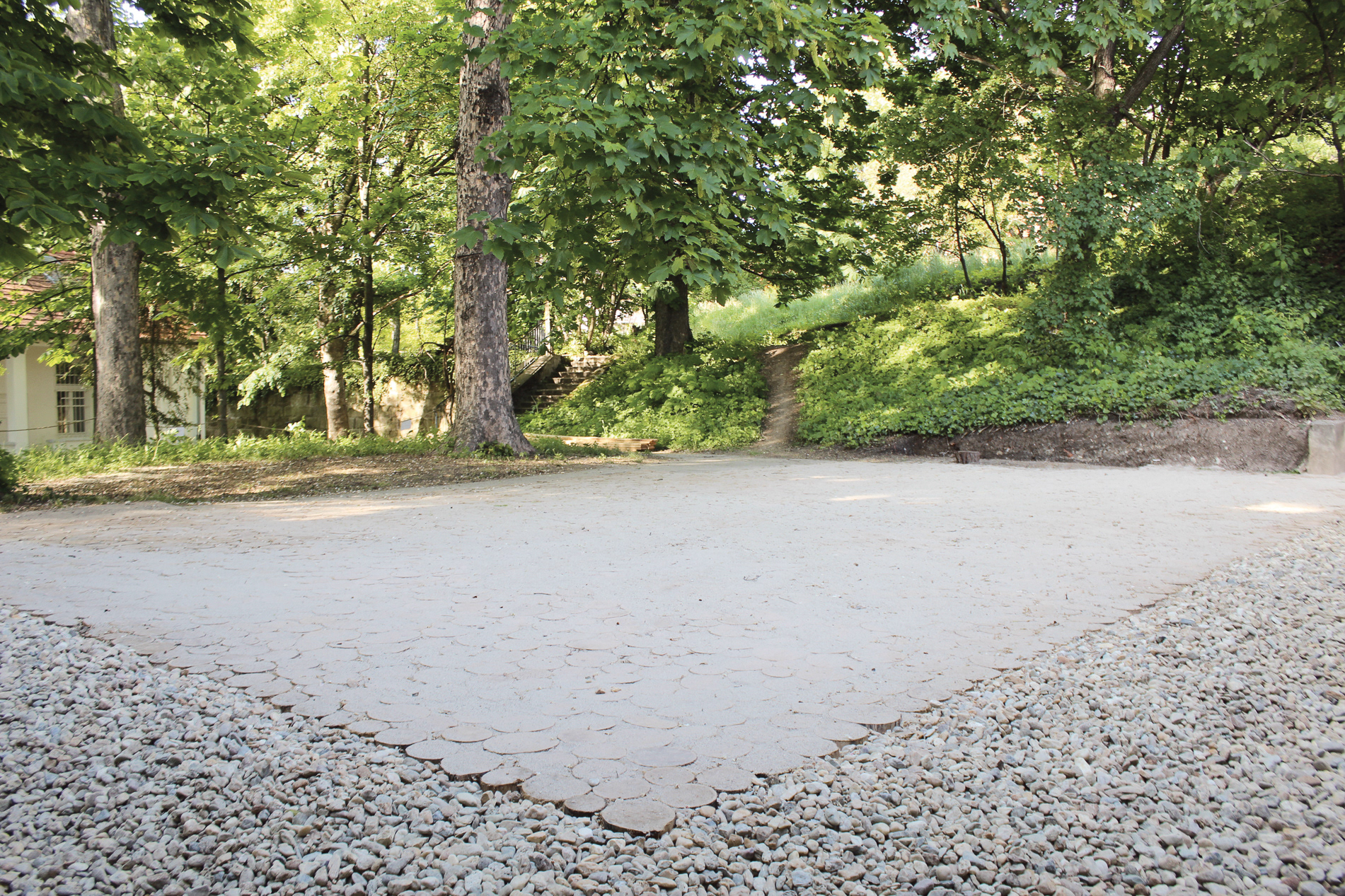
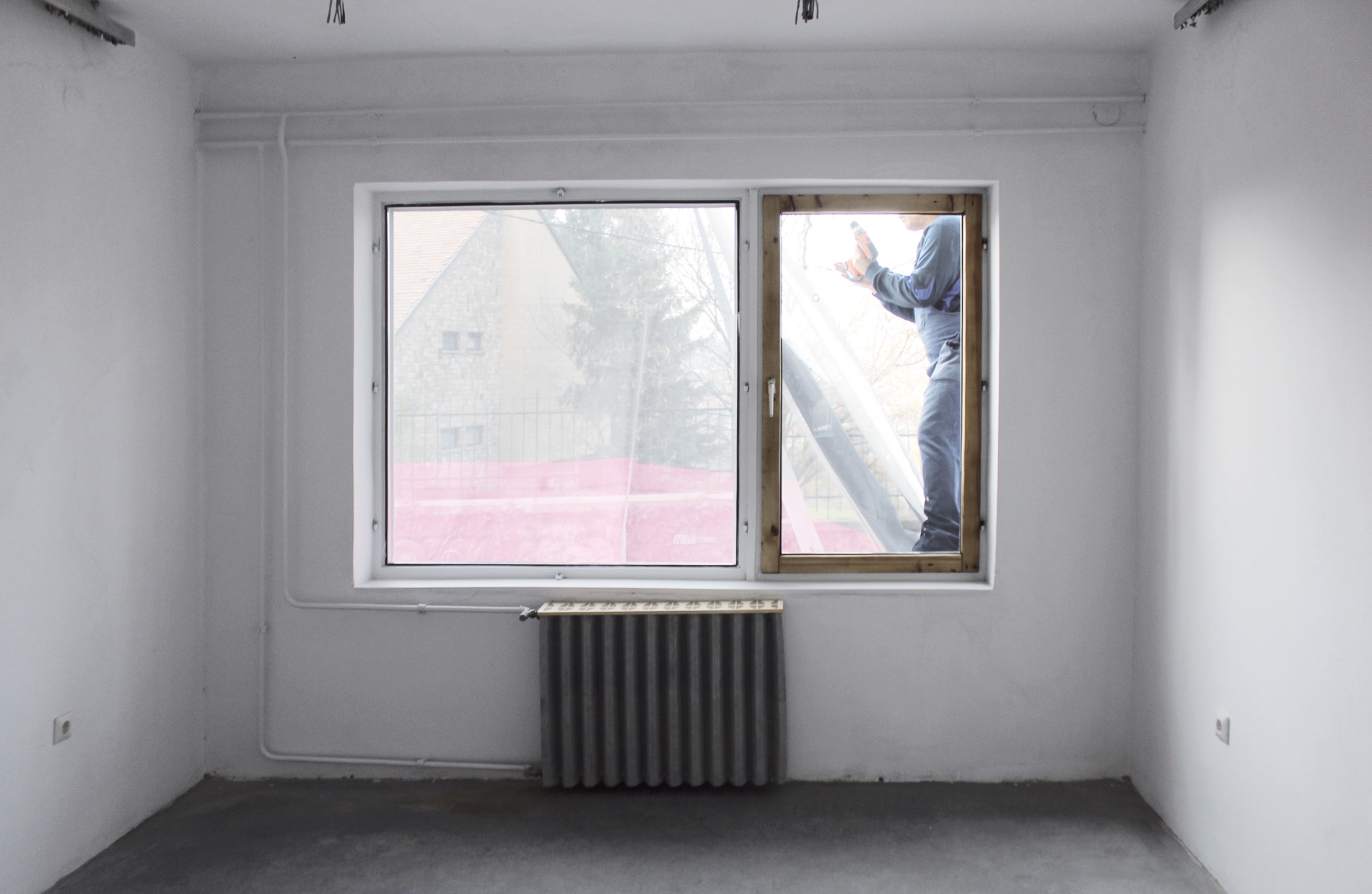
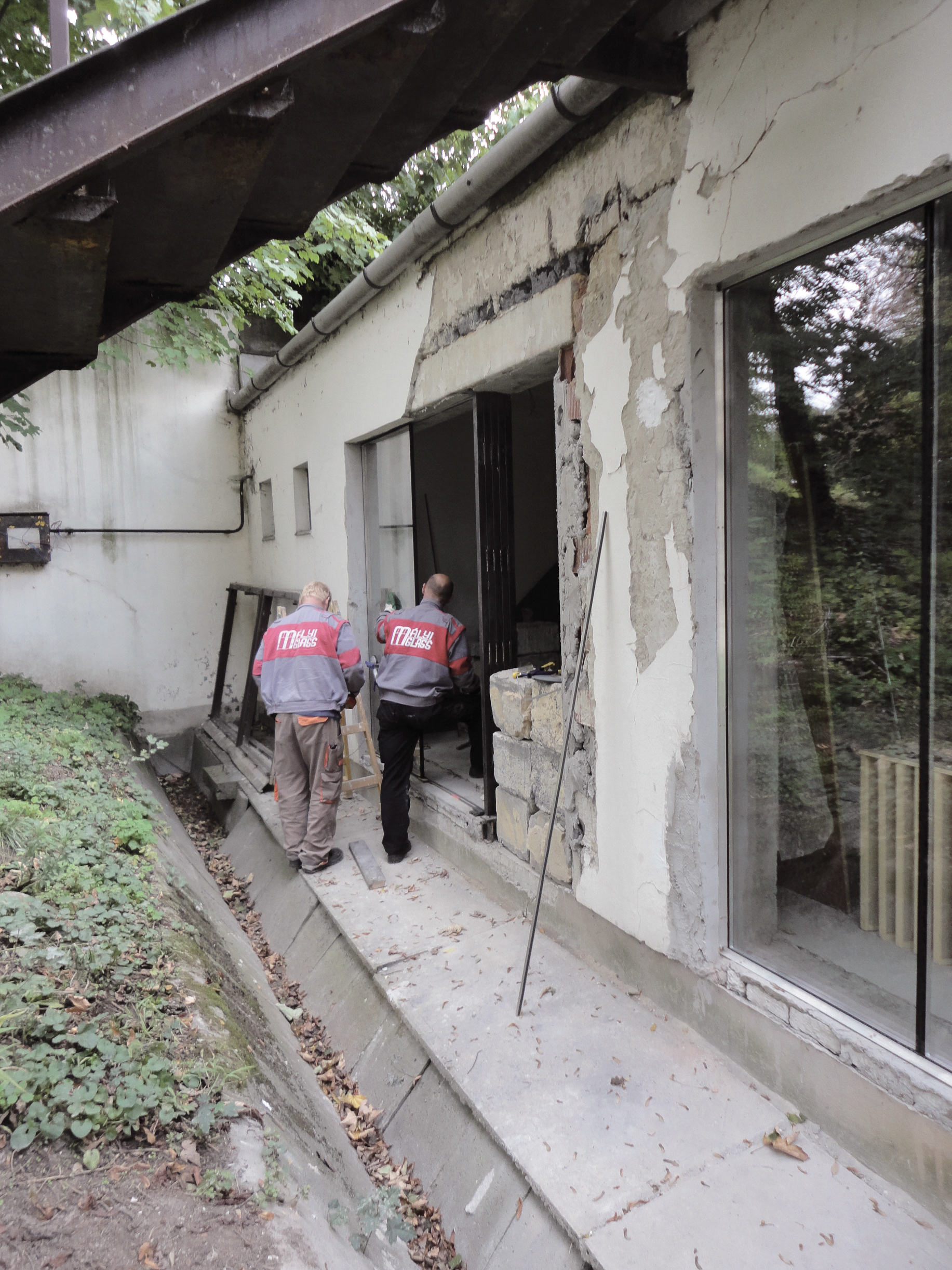
Most of the support came from local enterprises. They helped us with the concrete flooring, with the replacement of glazing in all of the doors and windows, and with smaller demolition and construction tasks, to mention a few. We were offered uniformly sliced logs for the terrace flooring.
Az önkormányzati egyeztetésekkel párhuzamosan felmértük, építőipari kapcsolataink vajon a kezdeményezés mögé állnak-e? Legnagyobb örömünkre ezekben az ínséges időkben nem sok zárt ajtóra találtunk.
Megfordítottuk a tervezés szokott irányát: először a szükséges feladatokra kerestünk támogatókat, majd a felajánlott anyagok felhasználásához rendeltünk építészeti megoldásokat.
Elsősorban helyi vállalkozók támogattak, többek között a beton padlóburkolat kialakításában, az épület összes nyílászáró üvegezésének cseréjében, valamint kisebb bontási és építési munkálatokban. A terasz burkolásához egységes vastagságúra felszeletelt rönkfát kaptunk.